
Skip to content

Experiences in Kashi

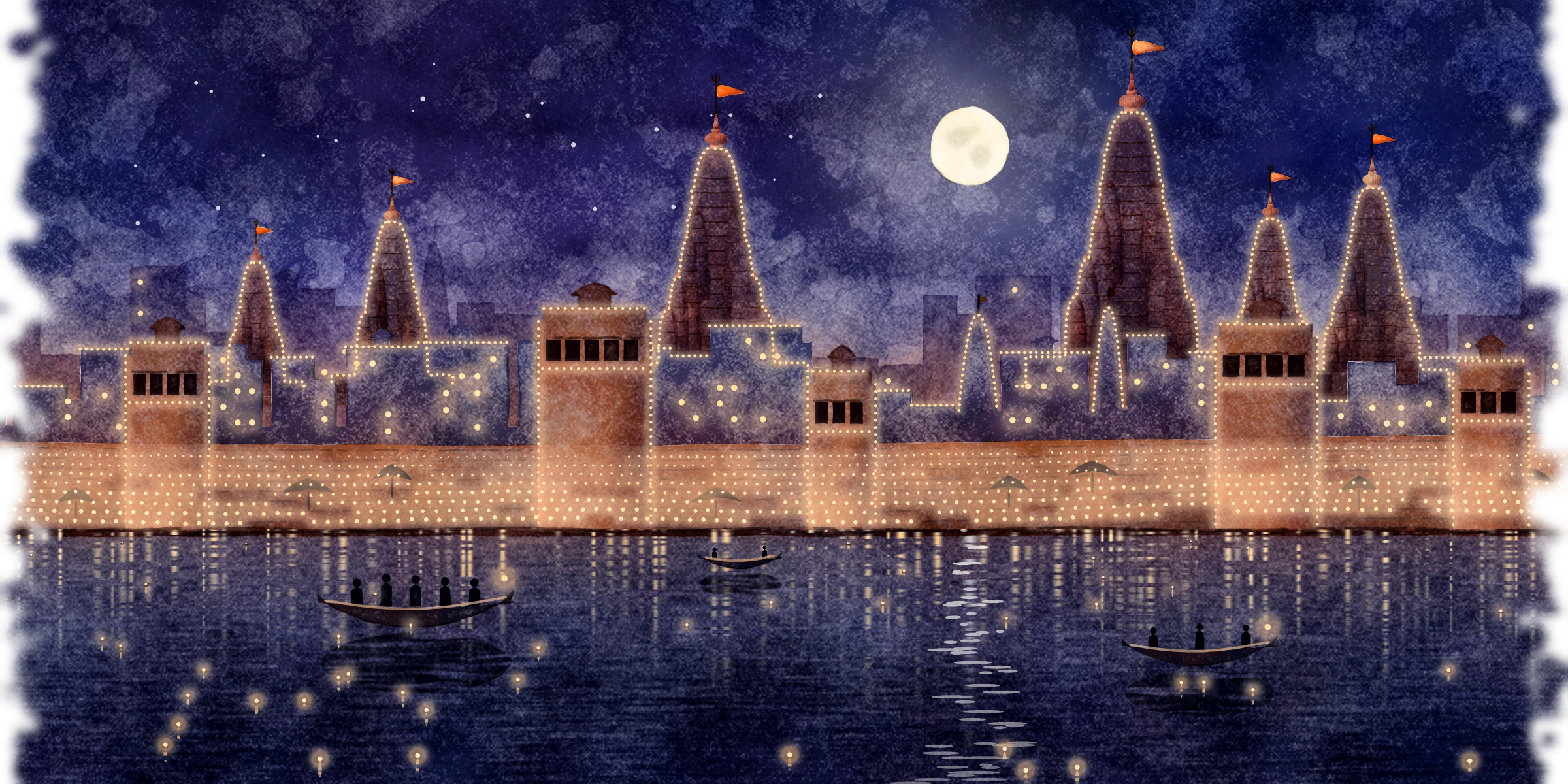
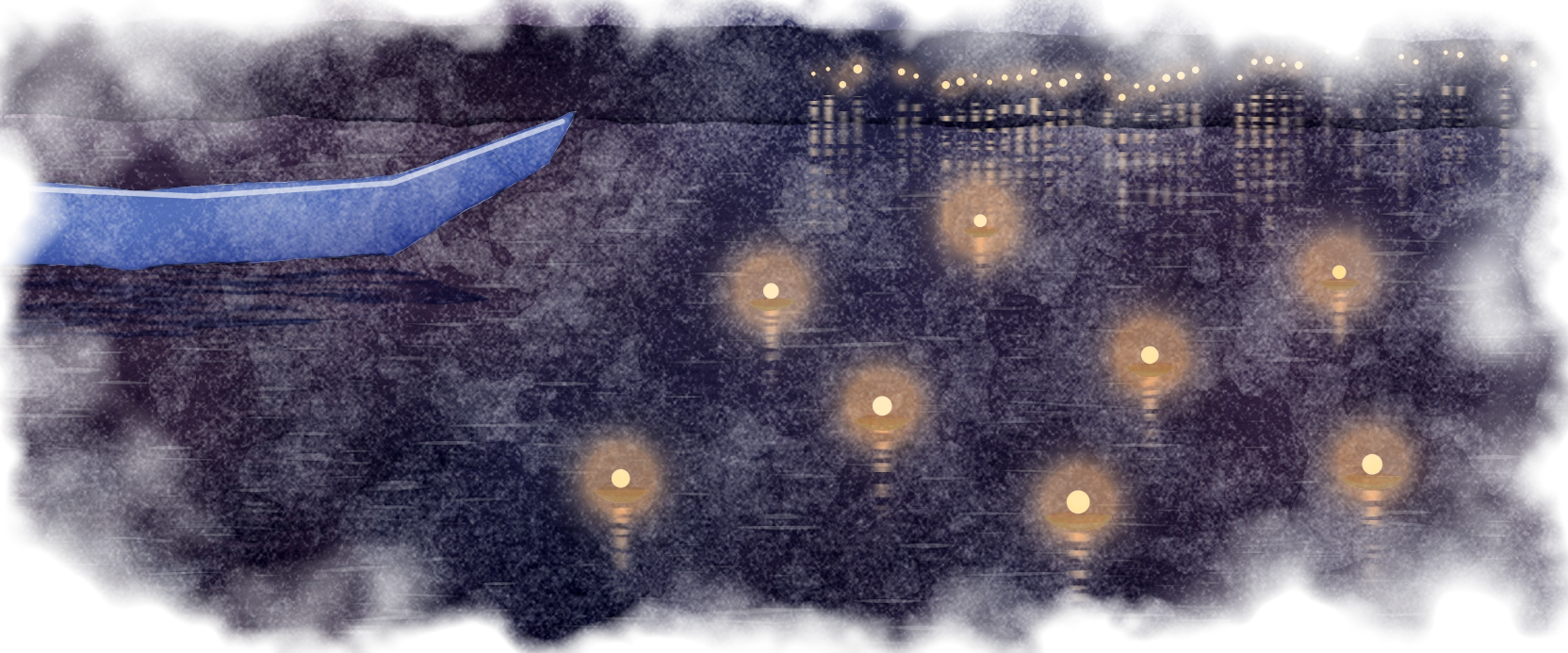
Kashi, from first light on the Ganga to the last lamp afloat

This is our Kashi: what we have seen, tasted and learned over many visits, as the old lanes slowly let us in on their secrets.

Much of it began with Parag, the man who inspired me every day and knew Banaras like the lines on his own palm. He led me to the tea shops, ghats and sweet sellers he loved, and told me the stories behind them. Here we pass them on to you.

Moksha Stays Kashi is five minutes on foot from Assi Ghat, so nearly all of it begins at our door.

Book

Start here

10 things to do in Kashi

Ten things we would never let a friend miss in Varanasi, all within a short walk or ride of Assi Ghat, with the timings, costs and small tips that make the day easier.

  1. Row out on the Ganga at dawn

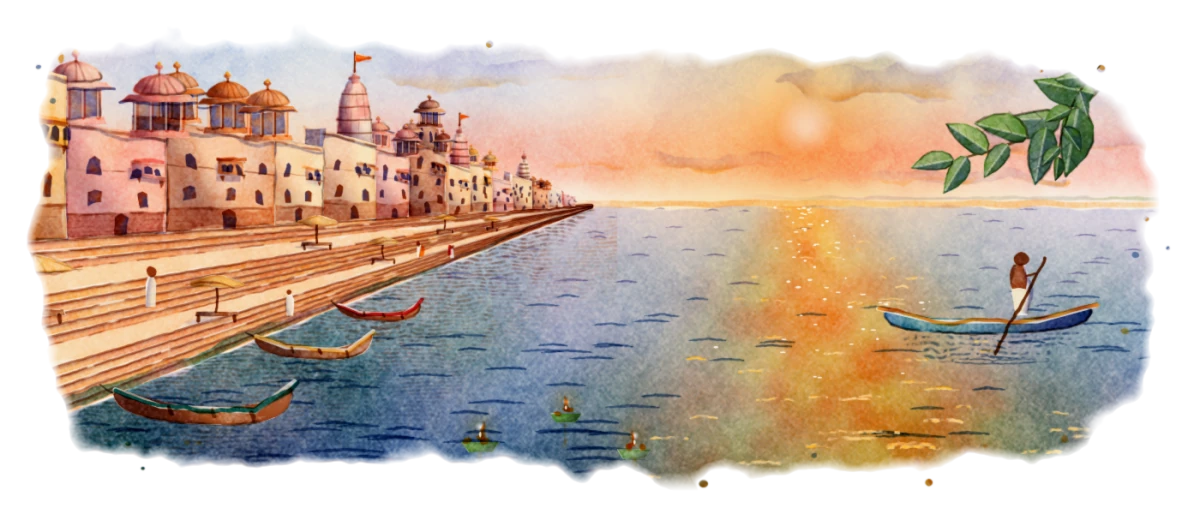
    The river is still, bells ring from the ghats and the whole riverfront turns gold as the sun comes up over the far bank.

    When
    Be on the water before sunrise: about 5:10 am in June, 6:45 am in January.
    Cost
    Agree the fare and the route with the boatman before you step in.
    Tip
    Choose a rowing boat over a motorboat: it is quieter, and the boatman can take you close to the ghats. We can book one we trust.
    More below: Row out on the Ganga at dawn
  2. Greet the sun at Subah-e-Banaras

    Vedic chanting, an aarti to the rising sun, a fire offering, a morning raga and yoga, every day since 2014 on the stage at New Assi Ghat.

    When
    From about 4:50 am in summer and 5:40 am in winter, for around two hours.
    Cost
    Free.
    Tip
    Most people stay for the aarti and the raga, then walk to Pappu’s for tea. Carry a shawl in winter: the river is cold before sunrise.
    More below: Greet the sun at Subah-e-Banaras
  3. Walk the ghats north from Assi

    Eighty-four stepped riverbanks, each with its own temple, palace and story, from wrestlers and bathers at dawn to card games in the afternoon.

    When
    Early morning or late afternoon. In the monsoon (about July to September) the river covers the lower steps and the path is often cut.
    Cost
    Free.
    Tip
    Dashashwamedh is about 2.5 km from us, half an hour on foot. At Harishchandra and Manikarnika, the cremation ghats, do not photograph the fires or the families.
    More below: Walk the ghats north from Assi
  4. Watch the evening Ganga aarti

    Fire, conch shells, bells and a thousand voices. The grand aarti is at Dashashwamedh; a smaller, gentler one is held at Assi.

    When
    At sunset every evening, roughly 6 pm in winter and 7 pm in summer, for about 45 minutes.
    Cost
    Free from the steps. A seat on a boat in front of the priests costs extra.
    Tip
    Arrive an hour early for a place on the steps, or watch from a boat for the best view: the priests face the river.
    More below: Watch the evening Ganga aarti
  5. Visit Kashi Vishwanath and Kaal Bhairav

    The city’s holiest temple, one of the twelve jyotirlingas of Shiva, in the wide new Kashi Vishwanath Dham corridor; and the shrine of Kaal Bhairav, the Kotwal of Kashi, whose blessing pilgrims seek before or just after.

    When
    Early morning is calmest. Mondays, Shivaratri and the month of Sawan are the busiest at Vishwanath; Sundays and Tuesdays at Kaal Bhairav.
    Cost
    Darshan is free at both. At Vishwanath, Sugam Darshan, a paid queue-free visit with a temple guide, is about ₹250–300 a person; the price varies by day and it is not sold on peak days, so check at the help desk. Visitors from abroad book their darshan ticket at the temple trust’s help desk, with their original passport and copies of the passport and visa.
    Tip
    Phones, smartwatches, cameras, pens and bags are not allowed inside Vishwanath, and lockers are limited. Leave them with us, and dress modestly.
    More below: Visit Kashi Vishwanath and Kaal Bhairav
  6. Wander the old lanes and meet silk weavers

    Narrow galis, hidden shrines, sweet shops and the handlooms where Banarasi silk, protected by a GI tag, is still woven thread by thread.

    When
    Mid-morning, when the shops and workshops are open.
    Tip
    Be wary of anyone offering a free tour that ends in a shop.
    More below: Wander the old lanes and meet silk weavers
  7. Drink tea at Pappu’s

    Order the famous ‘Hajmola’ lemon tea at Pappu ki Adi: tangy and a little sweet, with lemon, ginger, mint and crushed Hajmola. The Assi tea shop has fed the neighbourhood’s debates for decades.

    When
    From early morning into the evening.
    Cost
    Very little. Carry cash in small notes.
    Tip
    Lemon tea and milk tea are brewed in turns, so wait for your batch. It is a few minutes’ walk from us, at the Assi crossing.
    More below: Drink tea at Pappu’s
  8. Eat Banaras for breakfast

    Hot kachori with potato curry, then a jalebi straight from the oil; a lassi thick enough to eat with a spoon at noon; malaiyo in winter.

    When
    Kachori-jalebi in the morning. Malaiyo only from about November to February, early, before it sells out.
    Tip
    Eat where the locals queue and the food is fried in front of you. Drink bottled or filtered water.
    More below: Eat Banaras for breakfast
  9. See BHU and Bharat Kala Bhavan

    One of Asia’s largest residential university campuses, its white marble New Vishwanath Temple and a museum of Indian miniature paintings, sculpture and Banarasi textiles.

    When
    The museum usually opens 10:30 am to 4:30 pm (mornings only in May and June) and closes on Sundays and university holidays.
    Cost
    Museum entry about ₹20 for Indian visitors and ₹250 for foreign visitors.
    Tip
    The campus is huge: take an e-rickshaw between the temple and the museum. Check the museum is open the day before.
    More below: See BHU and Bharat Kala Bhavan
  10. Take a day out to Sarnath

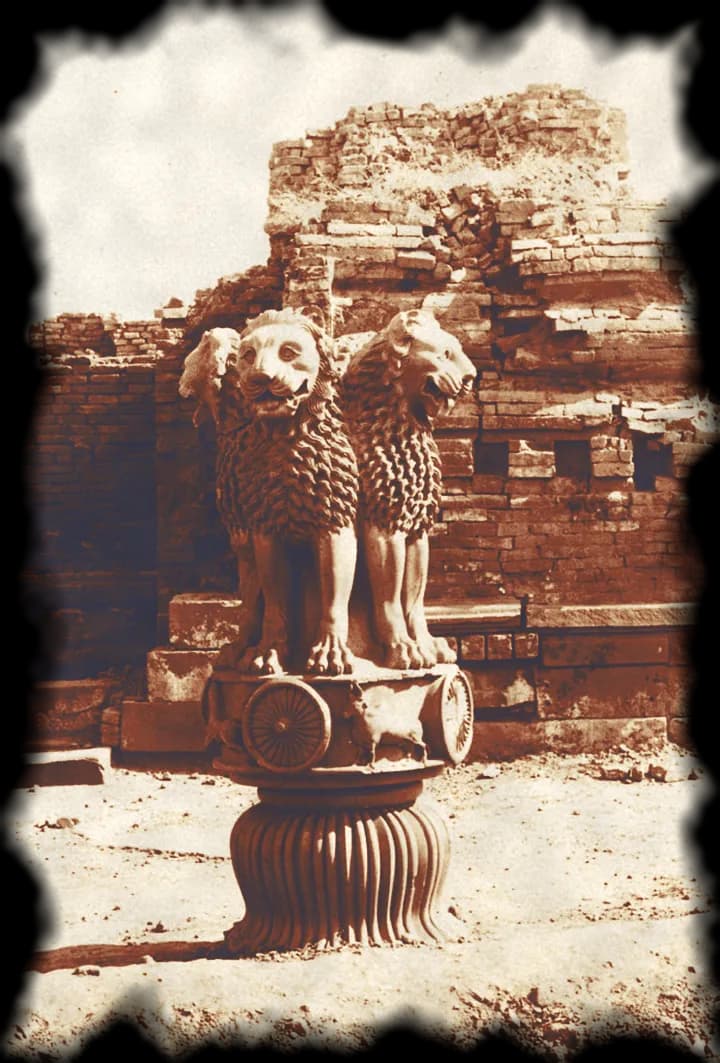
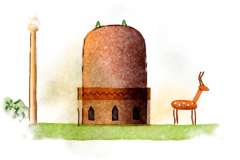
    Where the Buddha gave his first sermon: the Dhamek Stupa, the monastery ruins, temples built by Buddhist countries, and a museum holding the Lion Capital of Ashoka, India’s national emblem.

    When
    About 14 km away. The stupa park is open sunrise to sunset; the museum is closed on Fridays.
    Cost
    Stupa park ₹20 online or ₹25 in cash for Indian, SAARC and BIMSTEC visitors, ₹250 online or ₹300 in cash for others. Museum ₹5.
    Tip
    Go in the morning and come back for the evening aarti. We can arrange a taxi for the day.
    More below: Take a day out to Sarnath

Times and fees checked in November 2026. They change with the season and the festivals, so ask us the evening before.

Sunrise to starlight

A day in Kashi

Kashi wakes before the sun. Here is one way to spend a day with us, from the river at dawn to the bells at night.

  1. Dawn

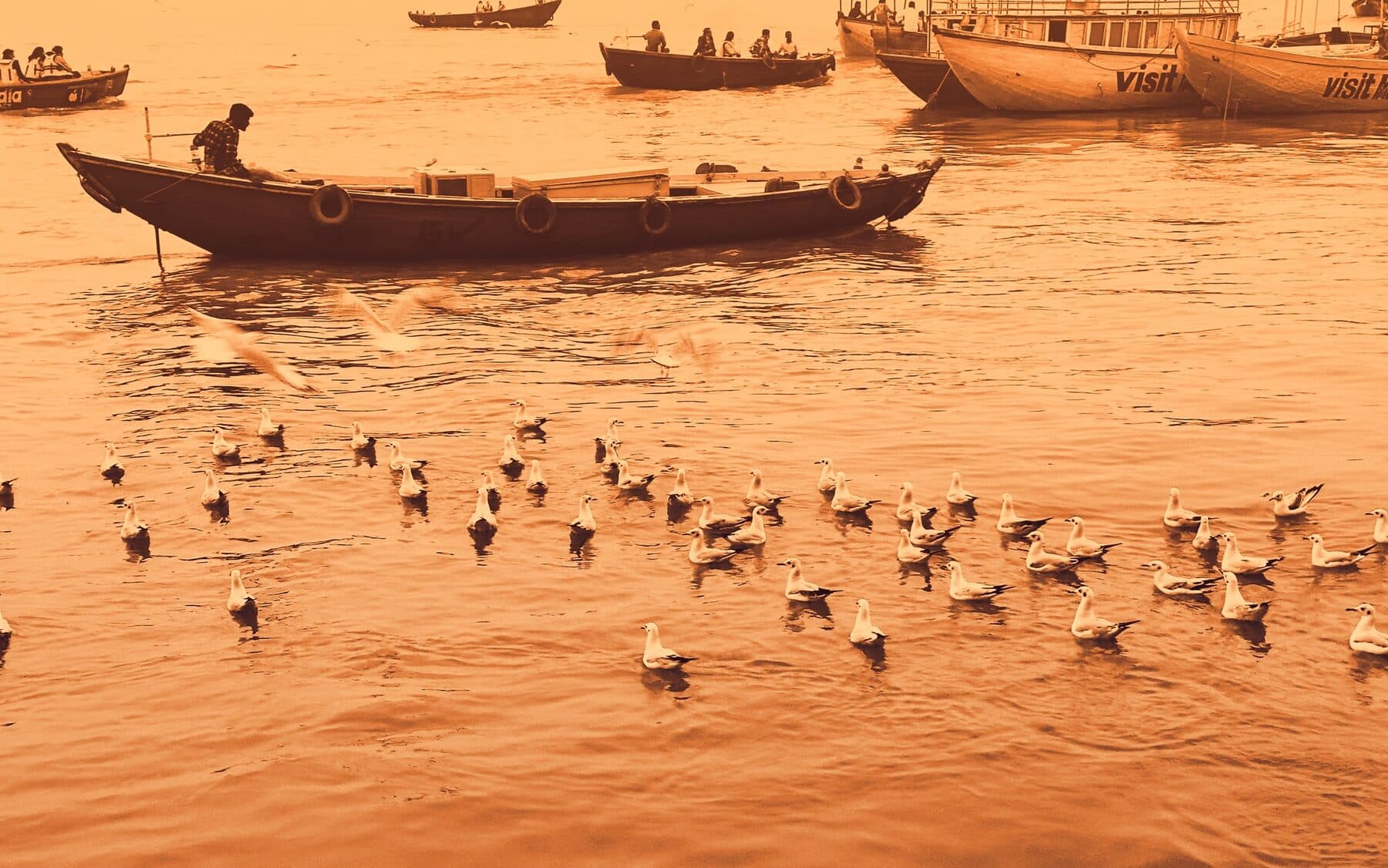
    A boat at first light

    A wooden boat on the Ganga at sunrise, a flock of white gulls on the orange-lit water

    The river is still. Bells ring from the ghats. The sun comes up slow and gold over the far bank.

  2. Morning

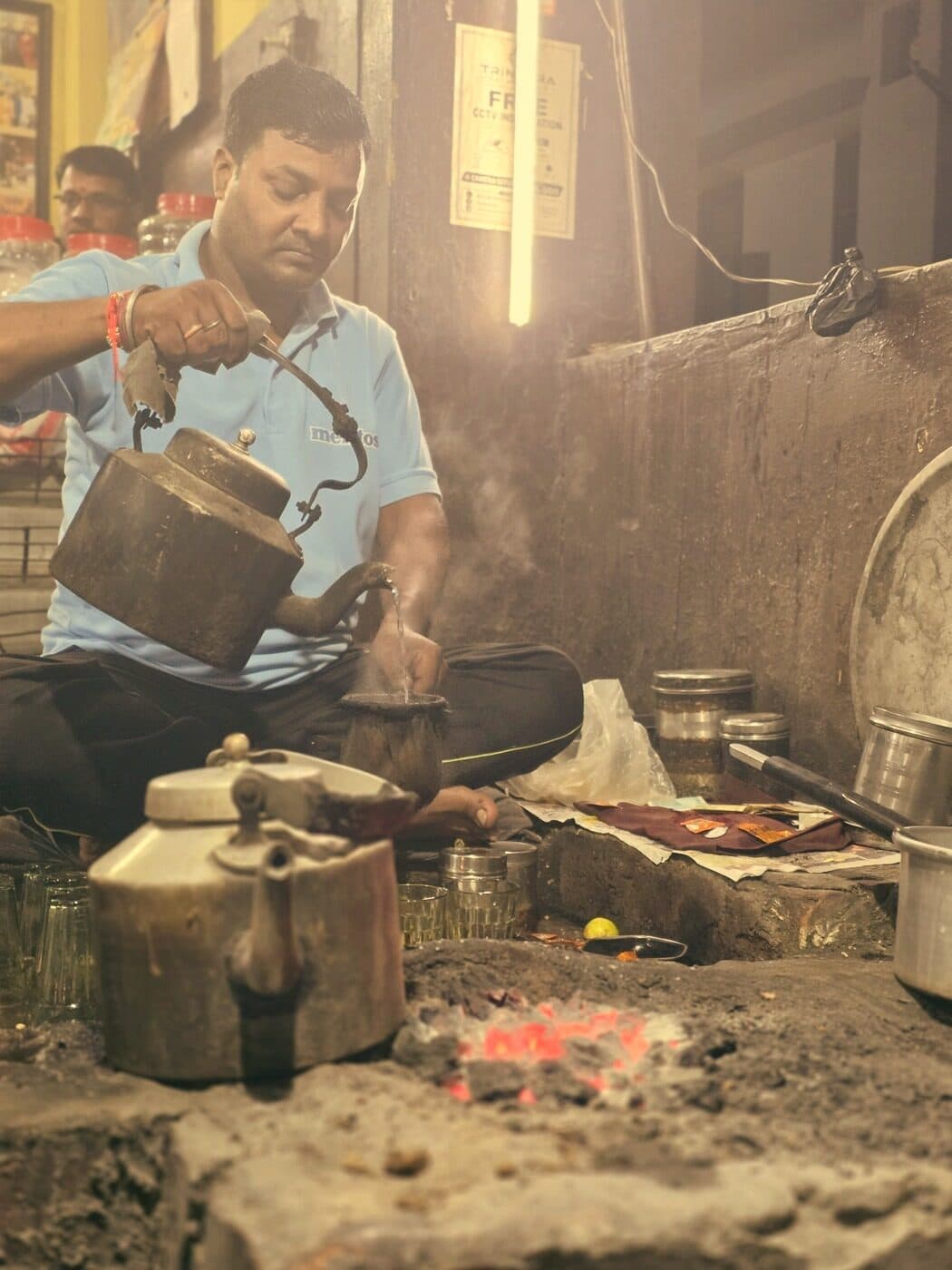
    Chai on the ghat

    A tea-maker at Pappu ki Adi pouring chai from a blackened kettle over glowing coals

    Hot chai in a clay cup, sipped on the steps. The city washes, prays and says good morning.

  3. Morning

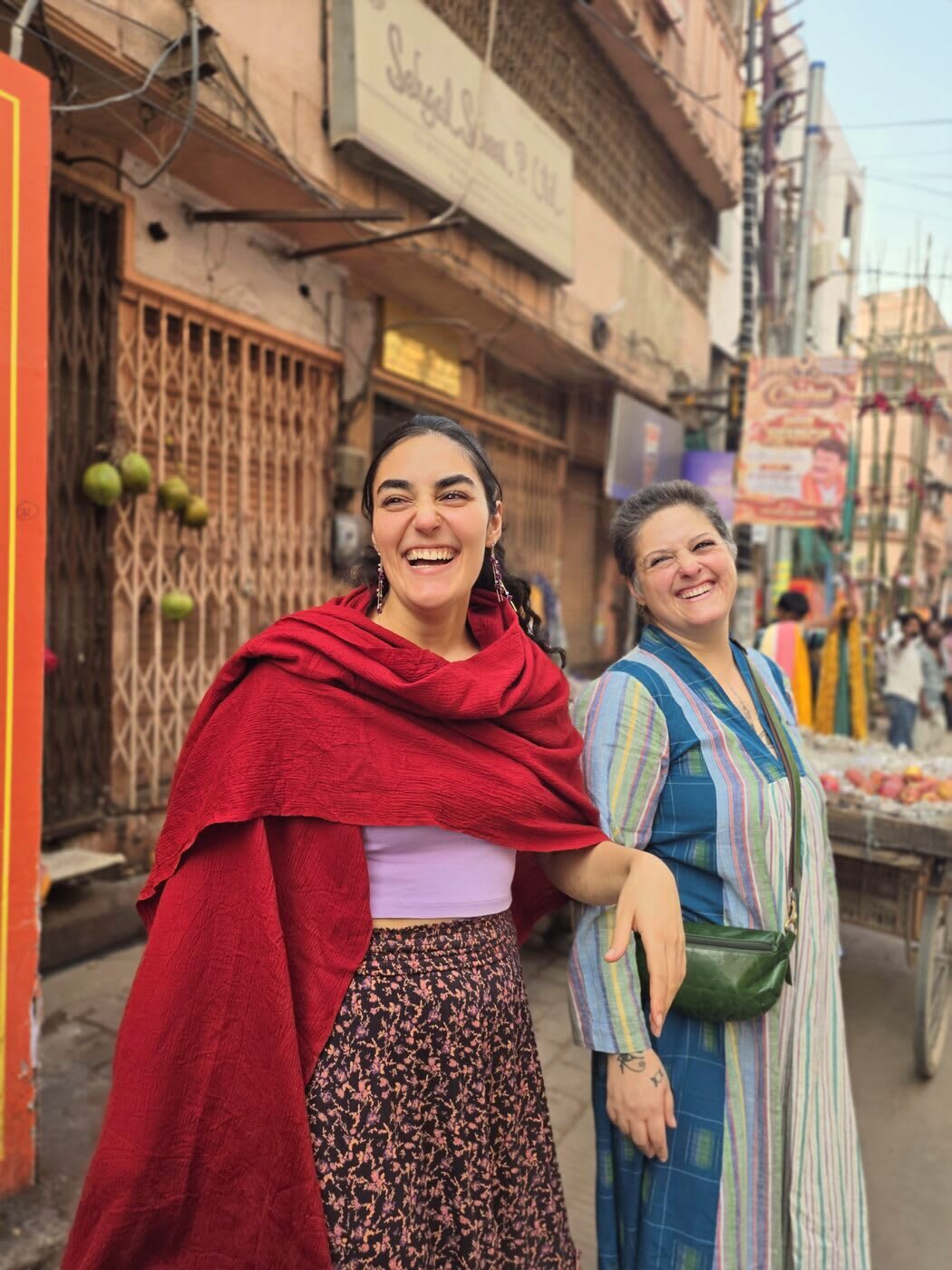
    Lanes, weavers and stories

    Two of us laughing in a colourful old lane of Kashi

    Wander the old lanes with someone who loves them. Silk looms, temple doors, a sweet shop or two.

  4. Afternoon

    An art workshop

    An artist carves lotus flowers into a gold relief panel for the house at Moksha Stays Kashi

    Sit with the artists who painted our walls. Make a small piece of Kashi to take home.

  5. Evening

    Evening aarti

    Priests in red raise tiered brass lamps of fire at the evening Ganga aartiIllustrative photo

    Fire, conch shells and a thousand voices. Watch from the steps, or from a boat on the water.

  6. Night

    A night walk on the ghats

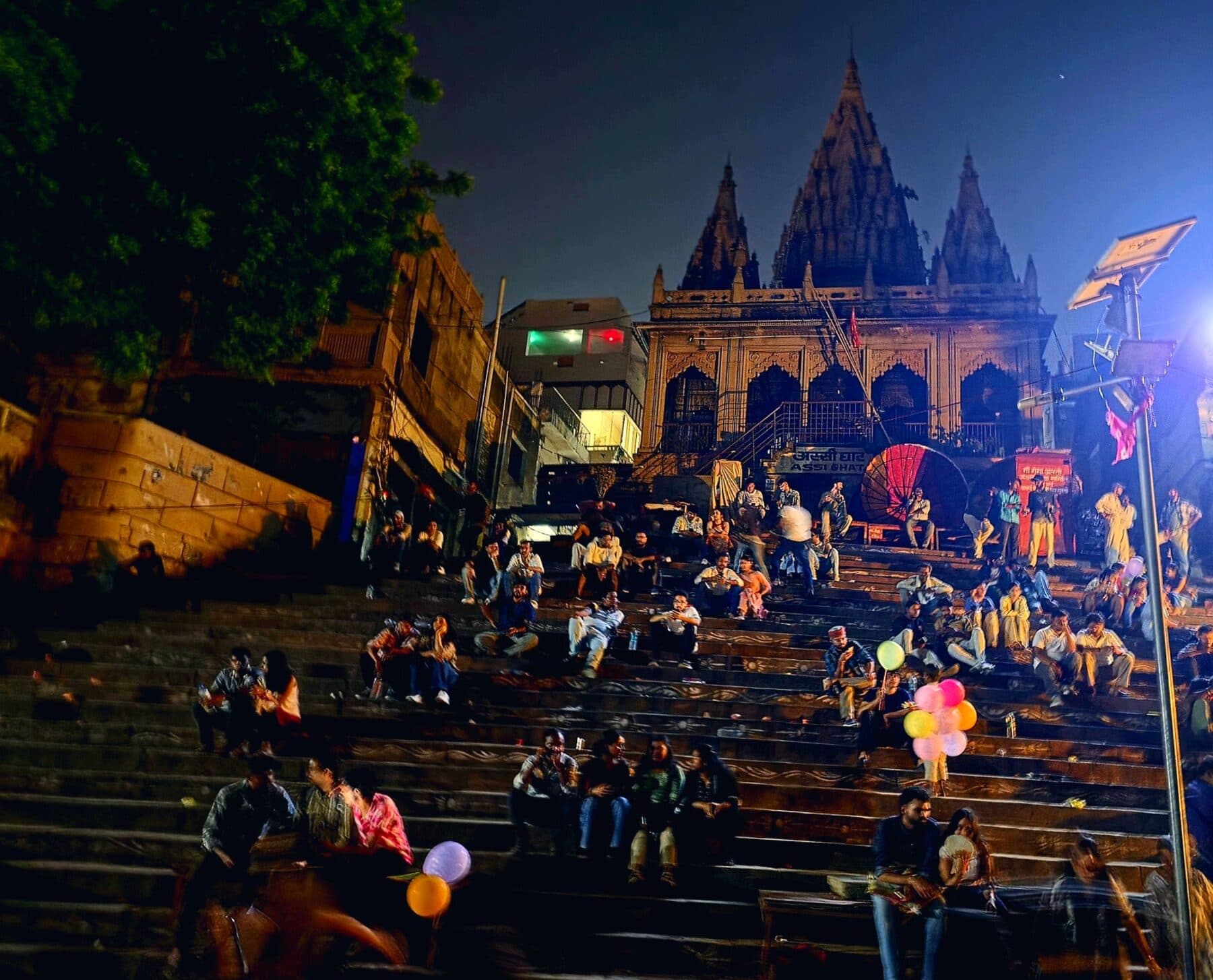
    The ghat steps at night below a lit temple, people sitting together by the river

    After nine the ghats fall quiet. Walk from Assi to Tulsi Ghat as boatmen settle in and bells ring far off. One of us can come along.

काशी के कोतवाल

The Kotwal of Kashi

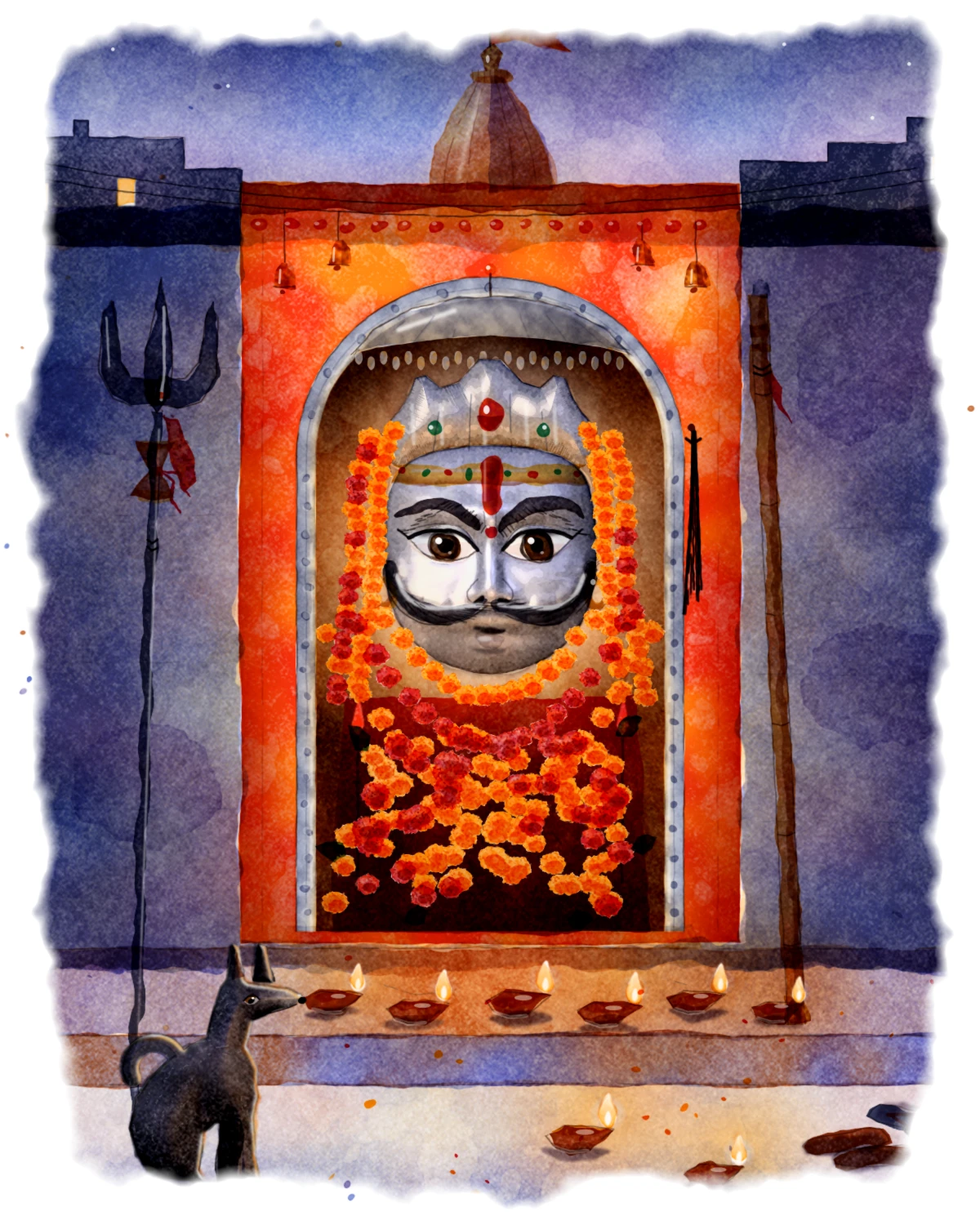
Kaal Bhairav, guardian of the city

Baba Kaal Bhairav is especially dear to us. If you visit one shrine in the old city, we hope it is his.

A painting: Baba Kaal Bhairav in his temple at dusk. His silver face, with wide eyes, a curled moustache, a red tilak and a silver crown, glows in the lamplight under a small silver canopy, heaped with marigold and red garlands. The saffron shrine front has a silver door frame and bells; a trishul with a damaru stands on one side, the Kotwal’s staff and black threads on the other. Oil lamps burn on the steps, and a black street dog sits at the foot of the steps looking up at the shrine.

Shiva in his fiercest form

Kashi is Shiva’s city, and Kaal Bhairav keeps it. He is Shiva in his fiercest form. Kaal means both time and death, and in Kashi it is said that even death answers to him. Banarasis call him the Kotwal, the city’s chief of police, and believe that no one lives in Kashi, or even stays a while, without his leave.

Release from the skull

The Kashi Khanda of the Skanda Purana tells how he came here. When Brahma claimed to be greater than Shiva, Bhairava sprang from Shiva’s anger and cut off Brahma’s fifth head. The skull stuck to his hand, and the sin of the deed followed him through every holy place in the three worlds, until he entered Kashi. Here, at last, the skull fell away, at the spot remembered as Kapal Mochan, ‘release from the skull’. Shiva made him the guardian of the city.

Report to the Kotwal

That is why pilgrims take his darshan before Kashi Vishwanath, or straight after it: you report to the Kotwal when you arrive in his city. It is said that officers posted to Varanasi still call on him when they take charge.

What you will see

  • Only his silver face shows through the sanctum door, garlanded with flowers; the rest of the image is draped in cloth. Dogs are revered and fed at this temple, and one or two are usually resting on the steps.
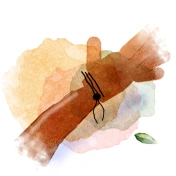
  • Priests tie a black thread, the kala dhaga, on your wrist for protection. It is prasad, and free. You will see it on wrists all over Banaras.
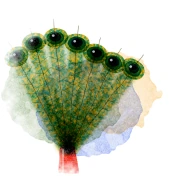
  • Some priests brush devotees lightly with a bundle of peacock feathers, to sweep away bad luck.
  • Devotees light mustard-oil lamps and bring flowers. Liquor is offered here too, an old part of Bhairava worship. It is an offering, never for drinking.

Going there

Where
Bhaironath, in the old-city lanes near Maidagin. Vehicles stop at Maidagin; the last few minutes are on foot.
When
From about 5 am, closed for a few hours around midday, then open again into the night. Sundays and Tuesdays are his days, and the busiest.
Festival
Kaal Bhairav Ashtami, the day he appeared, falls on Tuesday 1 December in 2026. The queue runs down the lane, so go very early.
Tip
Darshan is free. Leave your shoes at a stall outside and carry small notes for flowers and oil.

Avimukta · Never forsaken

Mystical Kashi

Kashi has many names. Kashi, ‘the luminous’. Avimukta, ‘never forsaken’ by Shiva. Anandavana, ‘the forest of bliss’. Mahashmashana, ‘the great cremation ground’. Under the bustle, it is a city of beliefs older than any building in it.

Stay in this storyThe Ananda room, Moksha Stays Kashi

  • त्रिशूल पर काशी

    The city on Shiva’s trident

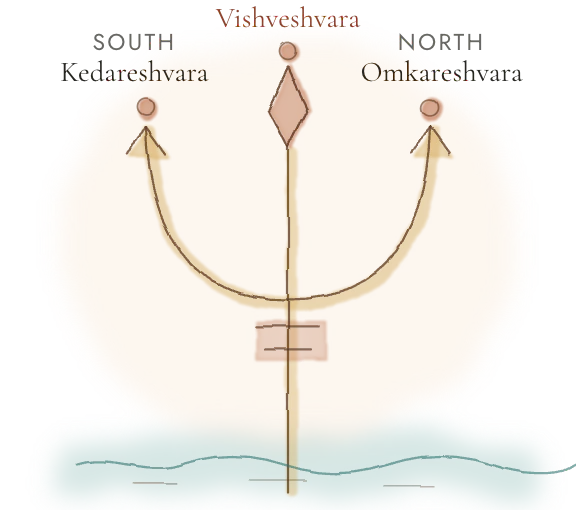
    The Puranas say Kashi does not stand on the earth at all but on the three points of Shiva’s trident, so when the world ends in the great flood, Kashi alone will be lifted above it. The three points are marked by three Shiva lingas: Omkareshvara in the north, Vishveshvara (Kashi Vishwanath) in the centre and Kedareshvara in the south.

    Where: Kedar Ghat, the southern point, about 1 km from Assi.

  • अखंड अग्नि

    The fire that never goes out

    At Manikarnika the pyres burn day and night. They are tended by the Dom community, whose head is called the Dom Raja, and tradition says every pyre is lit from a sacred flame that has never been allowed to go out.

    Where: Manikarnika Ghat. Watch from the steps or a boat; never photograph the dead.

  • पंचक्रोशी यात्रा

    The pilgrims’ circle

    Kashi is larger than the city. Its sacred field is drawn by the Panchakroshi Yatra, a pilgrims’ path of 25 kos, about 88 km, walked over five or six days with night halts at Kardameshwar, Bhimchandi, Rameshwar, Shivpur and Kapildhara, past 108 shrines. Everything inside the circle is Kashi.

    Where: Pilgrims begin with a bath at Manikarnika Ghat.

  • रत्नेश्वर महादेव

    The leaning temple

    Below Manikarnika, Ratneshwar Mahadev leans about nine degrees and spends most of the year with its sanctum under the river. Photographs from the 1860s show it standing straight. Its other name, Matri-rin Mahadev, ‘the debt to a mother’, comes from a legend that a son built it to repay his mother, and it tilted the moment he claimed the debt was paid.

    Where: Best seen from a boat, between Manikarnika and Scindia Ghats.

  • बाबा कीनाराम स्थल

    The seat of the Aghoris

    The Aghoris are Shaiva ascetics who reject every line between pure and impure. Their oldest seat is Baba Keenaram Sthal at Krim Kund, built around the samadhi of the 17th-century saint Baba Keenaram, where devotees say a sacred fire has been kept alight for centuries. Today the order runs schools and clinics.

    Where: Krim Kund, Ravindrapuri, about 2 km from Assi.

  • लोलार्क कुंड

    The well of the trembling sun

    Five minutes from Assi, steep steps lead some 15 metres down into Lolark Kund, one of the oldest sun shrines in Kashi. On Lolark Shashthi, in August or September, tens of thousands of women bathe here to pray for children.

    Where: Bhadaini, near Assi.

Moksha

The city of liberation

Hindus believe the soul is born again and again until it is set free, and that freedom is moksha. Kashi is one of seven cities said to grant it, and the most famous for one promise: that dying here is enough.

अयोध्या मथुरा माया काशी काञ्ची अवन्तिका।पुरी द्वारावती चैव सप्तैता मोक्षदायिकाः॥
Ayodhya, Mathura, Maya (Haridwar), Kashi, Kanchi, Avantika (Ujjain) and the city of Dwaraka: know these seven as the givers of liberation.Garuda Purana
  • तारक मंत्र

    Shiva’s whisper

    Kashi is Avimukta, the place Shiva never leaves. The belief is that whoever dies here is freed, because Shiva himself whispers the Taraka mantra, the ‘mantra of crossing over’, into their ear. For believers, a death in Kashi is a good death.

  • वरुणा और असी

    Between the Varuna and the Assi

    The Vamana Purana says the Varuna and the Assi sprang from the body of the first being at the beginning of time, and that the land between them is the holiest place of pilgrimage. The city took its name from them, and the dying are brought from far away to be inside it.

  • काशी लाभ मुक्ति भवन

    Kashi Labh Mukti Bhawan

    A plain house of about a dozen rooms in the old city, run since 1958 by a Dalmia family trust. Those who feel death near can stay with their family for up to fifteen days, for a token electricity charge, while priests sing bhajans and offer Gangajal and tulsi through the day. If death does not come, the family is gently asked to go home. The 2016 film Mukti Bhawan (Hotel Salvation) was inspired by such houses.

Mukti Bhawan is a home for the dying, not a sight. Please do not visit unless you are invited.

Stay in this storyThe Darwaza room, Moksha Stays Kashi

The light of Shiva

Two Kashis and a jyotirlinga

Kashi means ‘the luminous’. The Shiva Purana tells how Brahma and Vishnu argued over which of them was greater, until Shiva appeared between them as an endless pillar of light whose top and bottom neither could find. The twelve places where he is worshipped as that light are the jyotirlingas, and Kashi Vishwanath is one of them.

वाराणस्यां तु विश्वेशं
In Varanasi, Vishvesha, the Lord of the Universe.Dvadasha Jyotirlinga Stotram, the hymn naming the twelve

The Kashi of the plains

Varanasiकाशी

  • On the Ganga, between the Varuna and the Assi.
  • Manikarnika Ghat, and the Kashi Vishwanath temple.
  • Vishwanath here is a jyotirlinga, one of the twelve.

The Kashi of the north

Uttarkashiउत्तरकाशी

  • On the Bhagirathi, the Ganga’s source stream, between two streams also called the Varuna and the Asi.
  • Its own Manikarnika Ghat, and its own Kashi Vishwanath temple.
  • Called Saumya Kashi in the Kedar Khand of the Skanda Purana; a Himalayan town on the way to Gangotri.

Why share a name? Because of what Kashi means: the place where Shiva’s light is closest and liberation is promised. Towns across India took the name to share that holiness, by copying its rivers, ghats and temples: Uttarkashi in the north, Guptkashi, ‘the hidden Kashi’, on the road to Kedarnath, and Tenkasi, ‘the Kashi of the south’, in Tamil Nadu. Only Varanasi holds the jyotirlinga.

Stay in this storyThe Mangal room, Moksha Stays Kashi

Please be gentle with these places. Do not photograph cremations or ascetics without asking, and dress modestly at shrines.

The river

The 84 ghats of Kashi

Stay in this storyThe Pravah room, Moksha Stays Kashi

From Assi, by our door, to Adi Keshava, where the Varuna meets the Ganga. Follow the lamp down the river, or tap any ghat for its legends and stories.

Moksha Stays KashiYOUR HOME BY ASSI GHAT5 min walkChet SinghHarishchandraKedarDashashwamedhMan MandirManikarnikaBhonsalePanchagangaBrahmaRajAdi KeshavaAssiGangaNORTH →
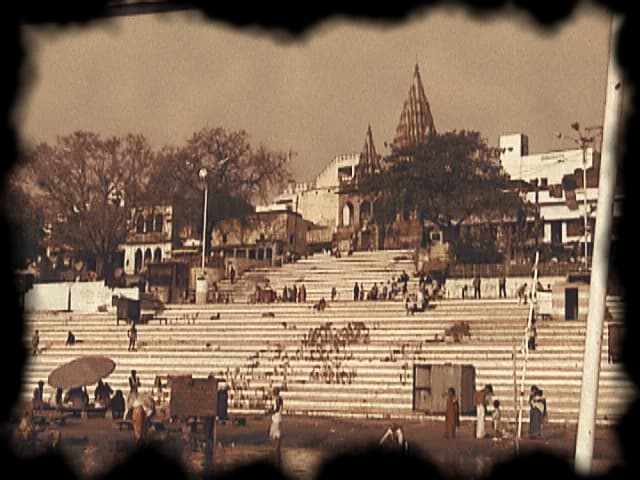
Photo of Assi Ghat, in warm tones

Ghat 1 of 84 · 5 min on foot

Assi Ghat

Sacred
Kashi’s southern gate. Pilgrims on the great five-day Panchakroshi walk bathe here, where the little Asi river met the Ganga, and bow to Asi Sangameshvara, the Lord of the Confluence.
Story
Until the 1980s Assi was a clay bank under big shady trees; its stone steps only came in 1988. Today it wakes to Subah-e-Banaras, a sunrise of aarti, music and yoga, five minutes’ walk from Moksha.

Photo: Vrinda, via Wikimedia Commons. Re-coloured by us. Original, CC BY-SA 3.0.

All 84 ghats, south to north

Old views of the ghats: James Prinsep (1830s), Samuel Bourne (1860s), Photoglob photochroms (about 1890), an old KITLV photograph and a British Library watercolour. Skyline: Edward Lear, Benares, 1873. All public domain, re-coloured by us. Modern photos from Wikimedia Commons, credited on each ghat; our warm-toned versions are shared under the same licences. Stories drawn from Rana P. B. Singh’s Varanasi Heritage Dossier.

Older than history

The oldest living city

Varanasi is often called the oldest living city in the world. Strictly, a few places, such as Damascus and Jericho, have older remains. What makes Kashi rare is that it never stopped: it has been lived in, prayed in and traded from without a break for close to three thousand years.

What the ground says

  1. c. 1200 BCE

    Excavations at Aktha, near Sarnath, and at Sarai Mohana, across the Varuna, found villages of potters and farmers from around this time.

  2. c. 800 BCE

    In 1940 a railway contractor digging near Kashi station struck the old city at Rajghat, where the Varuna meets the Ganga. Banaras Hindu University’s excavations from 1957 found it lived in without a break from about 800 BCE to the 1600s.

  3. 6th–5th century BCE

    Varanasi is the capital of Kashi, one of the great kingdoms of the Buddha’s time, famous for its cloth. The Buddha gives his first sermon at Sarnath, just outside it.

  4. Gupta period

    A clay seal from Rajghat reads ‘the seal of the city administration of Varanasi’: the name was already official some 1,500 years ago.

Stay in this storyThe Maati room, Moksha Stays Kashi

Three names, one city

  • काशीKashi

    From kas, ‘to shine’: the luminous city, the place of Shiva’s light. It was first the name of the kingdom and its people, the Kashis, whose capital this was.

  • वाराणसीVaranasi

    The Puranas place the city between two streams that join the Ganga, the Varuna in the north and the Assi in the south: Varuna and Assi make Varanasi. Some scholars think the name came from the Varuna alone, once also called Varanasi, beside which the early city stood.

    The Assi meets the Ganga at Assi Ghat, a few minutes from us; the Varuna at Adi Keshava Ghat, at the far northern end of the ghats.

  • बनारसBanaras

    Everyday speech wore Varanasi down over the centuries, to Baranasi in Pali, Vanarasi in Prakrit and Banaras in Hindi. Mughal and British writers spelt it Benares.

On 24 May 1956 the state government made Varanasi the official name again. The city still calls itself Banaras, and its silk and its paan are Banarasi.

Stay in this storyThe Kashi room, Moksha Stays Kashi

From the Buddha to Bismillah Khan

The people of Kashi

For close to three thousand years, people have come to Kashi to teach, to pray, to write and to play music, and many never left. Here are some of them, with the houses, ghats and lanes near us where you can still feel them.

“Benares is older than history, older than tradition, older even than legend, and looks twice as old as all of them put together.”
Mark Twain, Following the Equator, 1897
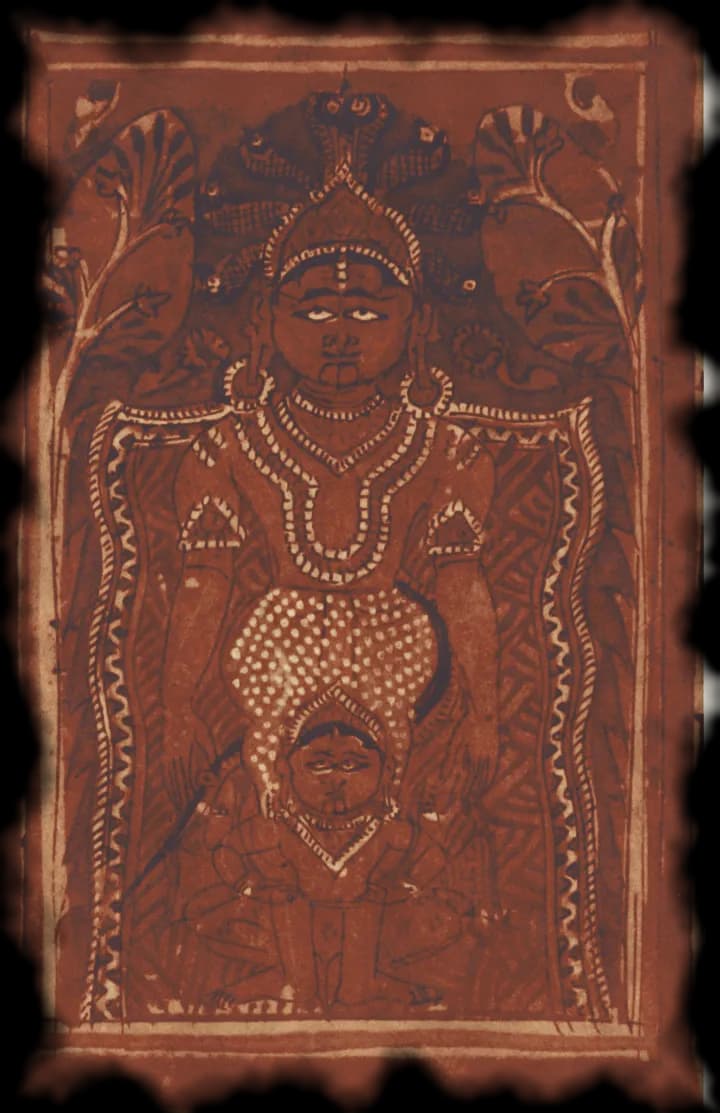
Parshvanatha
Parshvanatha seated beneath the hoods of a cobra, from a Jain manuscript, tinted in terracotta and gold

The ancient city

c. 800 BCE – 700 CE

1 of 23

c. 8th century BCE

Parshvanathaपार्श्वनाथ

The 23rd Jain Tirthankara

Jain tradition says he was born in Varanasi, the son of King Ashvasena and Queen Vama, and gave up his kingdom at thirty to become an ascetic. He is the earliest Jain teacher whom historians generally accept as a historical figure.

He taught four vows: not to harm, not to lie, not to steal and not to possess. Mahavira later added a fifth.

Where to find themThe Jain temple at Bhelupur marks his birthplace, ten minutes from Assi.

Jain manuscript page, western India, about 1500–1600. Honolulu Museum of Art. Original, CC0.

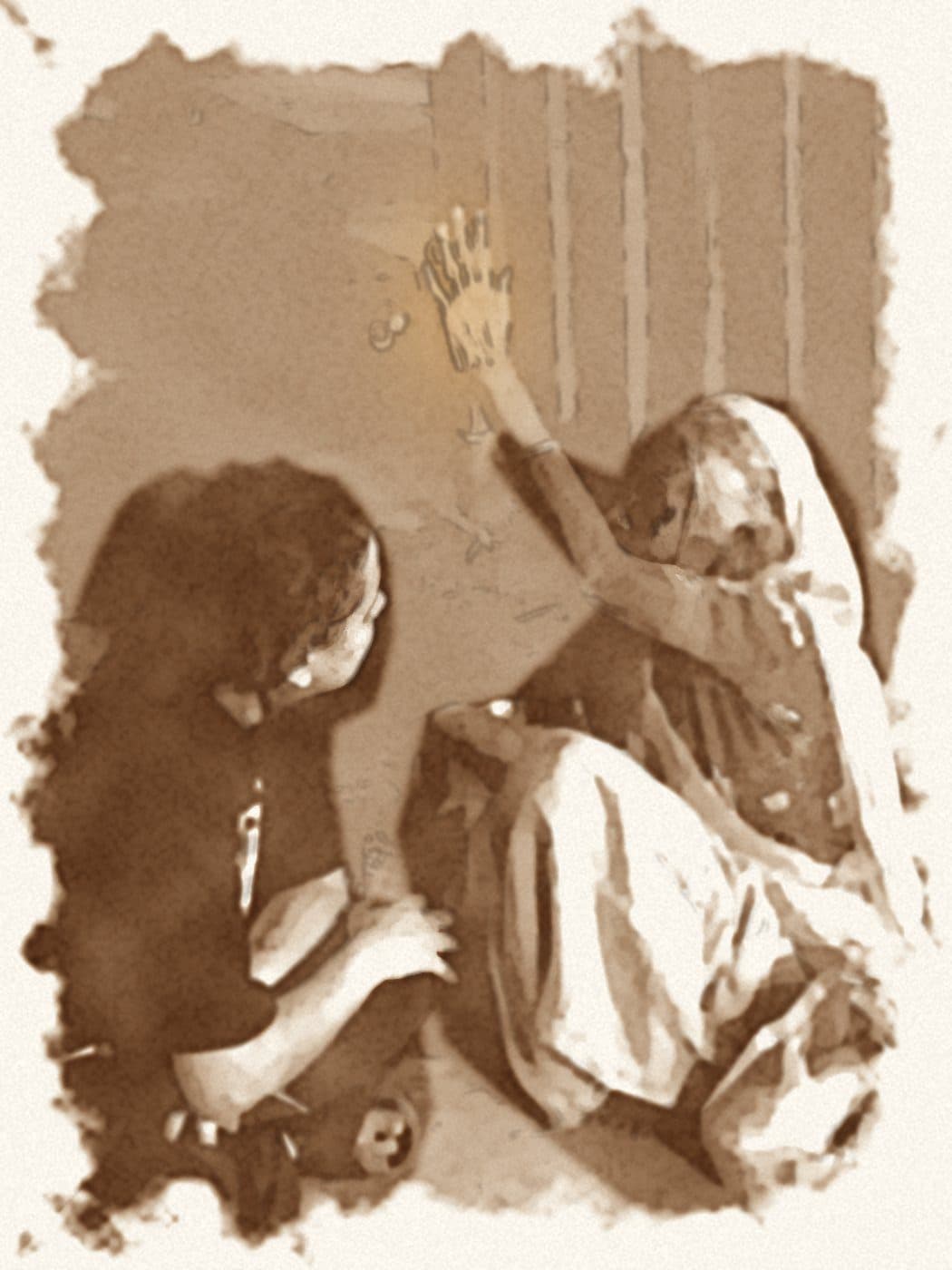
A sepia watercolour: an elderly woman in a white sari, sitting on the ghat, raises her hand in blessing over a young person sitting beside her.
A blessing on the ghats.

And today

The story is still being written by the boatmen, priests, weavers, scientists and volunteers who look after the city and its river.

Meet the people caring for Kashi

1781 – 1947

Kashi and India’s freedom

The city of saints was also a city of rebels. From a raja who sent Warren Hastings running to the girl from Bhadaini who became the Rani of Jhansi, Kashi gave the freedom struggle some of its bravest people, a few streets from where you are staying.

  1. 1781

    Raja Chet Singh and the flight of Warren Hastings

    When the Governor-General came to Banaras to squeeze more money from the young Raja Chet Singh, and placed him under arrest at Shivala, the Raja’s soldiers and the townspeople rose against the British guard. Chet Singh escaped across the river, and Hastings had to slip out of the city to Chunar. Banaras still laughs about it in a rhyme.

    घोड़े पर हौदा, हाथी पर जीन, काशी से भागा वारेन हेस्टीन
    A howdah on the horse, a saddle on the elephant: that’s how Warren Hastings fled Kashi.

    Chet Singh Ghat at Shivala, where the fort still stands, a ten-minute walk from Assi.

  2. c. 1828 – 1858

    Rani Lakshmibai, the girl from Bhadaini

    Manikarnika Tambe, ‘Manu’, was born in Bhadaini, a few minutes from Assi; her birth year is disputed, and 1828 is the year most often given. Married into the royal house of Jhansi, she refused to hand her kingdom to the East India Company, led her army in the rebellion of 1857, and died fighting at Gwalior on 18 June 1858.

    मैं अपनी झाँसी नहीं दूँगी
    I will not give up my Jhansi.

    Her birthplace at Bhadaini, now a small park with her statue on horseback, near Assi Ghat Road.

  3. 1905

    The Congress meets in Benares

    The Indian National Congress held its 21st session in Benares in December 1905 under Gopal Krishna Gokhale, months after the partition of Bengal, as the call for Swadeshi, Indian goods over British, spread across the country.

  4. 1916

    Gandhi’s speech at BHU

    During the founding celebrations of Banaras Hindu University, on 6 February 1916, Gandhi, newly back from South Africa, told the jewelled princes on the stage that India’s salvation would not come from them, and spoke of the dirt in the lanes around Vishwanath. The meeting broke up in uproar. It is remembered as the speech in which he announced himself to India.

  5. 1915 – 1945

    Sachindra Nath Sanyal

    Born in Benares in 1893, he built secret revolutionary groups in the city, was sent to the Cellular Jail in the Andamans after the Benares Conspiracy Case of 1915, and on his release helped found the Hindustan Republican Association, the group that Chandra Shekhar Azad and Bhagat Singh later led. His prison memoir, Bandi Jivan, inspired a generation.

  6. 1921

    Kashi Vidyapith, a university against the Raj

    During Gandhi’s Non-Cooperation Movement, when students were walking out of British-run colleges, Shiv Prasad Gupt and Bhagwan Das founded Kashi Vidyapith as a national university, with Gandhi at its opening. Lal Bahadur Shastri was among its students. Gupt also founded the Hindi daily Aaj, and built the Bharat Mata Mandir, opened by Gandhi in 1936, whose only image is a marble relief map of undivided India.

    Bharat Mata Mandir, on the Kashi Vidyapith campus.

  7. 1921

    How Chandra Shekhar became ‘Azad’

    A fifteen-year-old Sanskrit student in Banaras, he was arrested for joining the Non-Cooperation Movement. Asked his name in court, he said ‘Azad’ (free); his father’s name, ‘Swatantrata’ (independence); his home, ‘the prison’. He was sentenced to fifteen lashes, and kept the name for the rest of his short, defiant life.

UNESCO City of Music, 2015

Art and culture of Banaras

In Banaras, music is played to the gods, theatre fills whole towns, and wrestling begins at dawn on the ghats. These are the living traditions worth planning a day around.

Stay in this storyThe Dhwani room, Moksha Stays Kashi

  • Music

    The Banaras gharana

    A tabla style of its own, the Banaras baaj, shaped by Pandit Ram Sahai in the early 1800s, and a singing tradition rich in thumri, dadra and the seasonal songs kajri, chaiti and hori. It lives in the lanes of Kabir Chaura, where families still teach as guru to disciple.

  • Festival

    Sankat Mochan Sangeet Samaroh

    Since 1923, for several nights around Hanuman Jayanti, India’s greatest musicians and dancers have performed at the Sankat Mochan temple, free and through the night, as an offering to Hanuman. Listeners sit on the temple floor until dawn.

    March or April, around Hanuman Jayanti

  • Festival

    Dhrupad Mela

    Five days of dhrupad, the oldest surviving form of Hindustani classical singing, on the steps of Tulsi Ghat, a few minutes from us.

    February or March, around Mahashivratri

    Stay in this storyThe Antara room, Moksha Stays Kashi

  • Theatre

    The Ramlila of Ramnagar

    Begun around 1830 by the Maharaja of Banaras, this Ramlila runs for about a month every autumn around Dussehra. The whole town of Ramnagar is the stage: Lanka, Ayodhya and the forest are real places, and the audience walks with the actors from scene to scene. UNESCO recognised Ramlila as world heritage in 2008.

    September or October, over about 31 days

  • Theatre

    Nag Nathaiya

    On one evening in Kartik, a boy playing Krishna climbs a kadamba branch at Tulsi Ghat and leaps into the Ganga to subdue the serpent Kaliya, before a crowd of thousands on the steps and in boats. The festival is said to have been started by Tulsidas.

    October or November, in the month of Kartik

  • Tradition

    Akharas, the wrestling pits

    At dawn, wrestlers in langots train in pits of soft red earth, swinging heavy wooden clubs and grappling under a shrine to Hanuman. Tulsi Akhara, at Tulsi Ghat, is said to have been founded by Tulsidas himself.

    Every morning, early

  • Words

    A city of Hindi

    Kashi gave modern Hindi much of its literature, from Bharatendu to Premchand and Jaishankar Prasad. The Nagari Pracharini Sabha, founded here in 1893, campaigned for the Devanagari script and compiled the great Hindi dictionary, the Hindi Shabdasagar.

For silk, enamel, toys and brass, see What to buy, below.

Around Kashi

Kashi at your own pace

Moksha Stays is near Assi Ghat, about five minutes on foot, which makes it a wonderful base for the city. Here is what is close by and how to get around.

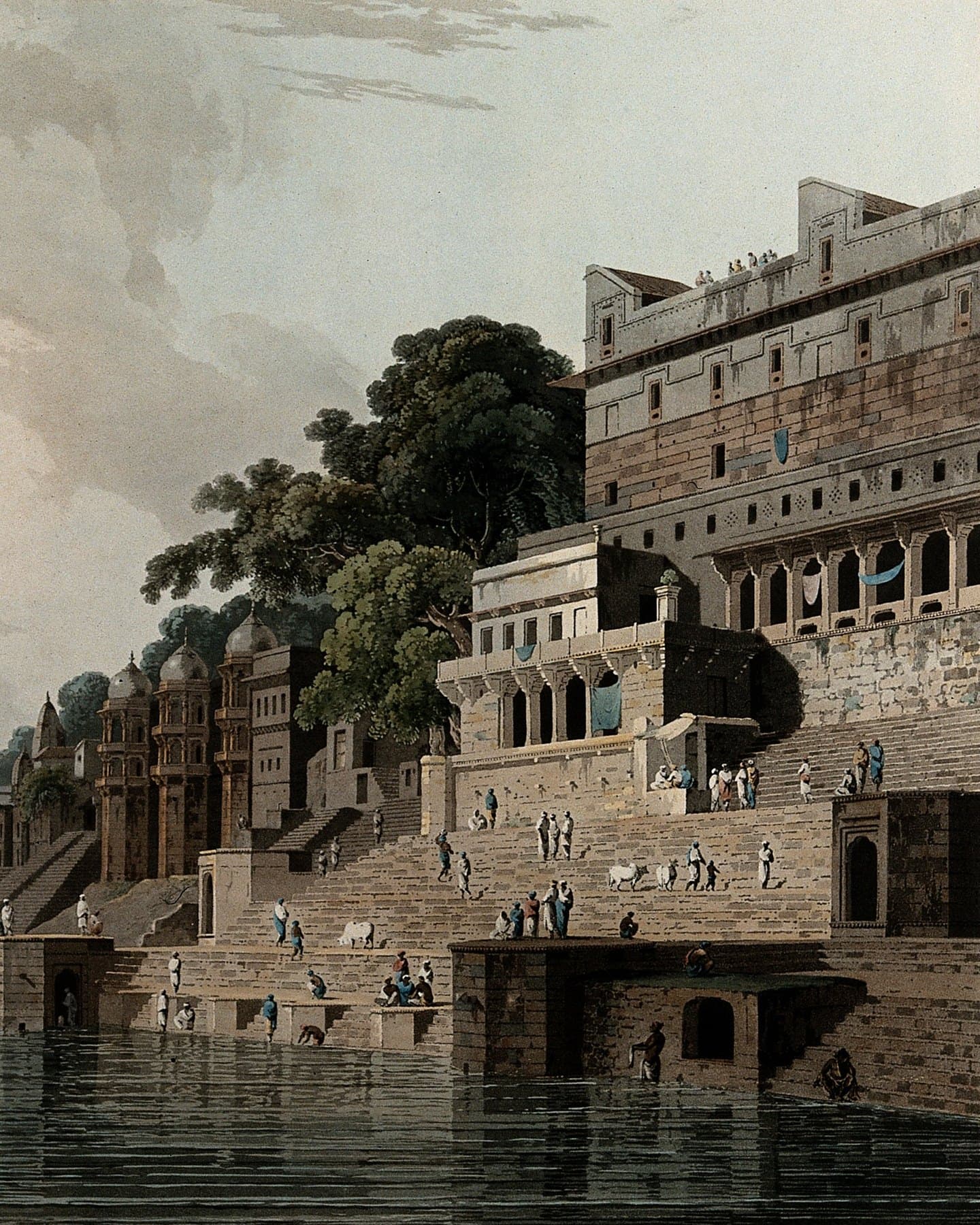
A hand-coloured 1796 print of Dasasamadhi Ghat in Benares: a sandstone palace and a great tree above wide steps down to the Ganga, with bathers and a cow on the steps
Dasasamadhi Ghat, Benares. Thomas Daniell, 1796. Wellcome Collection, public domain.

A short walk away

Assi Ghat
Approximately 450 m · 6 min
Durga Kund
Approximately 750 m · 10 min
Tulsi Manas Mandir
Approximately 800 m · 10 min

Further afield

Sankat Mochan Mandir
Approximately 1.2 km
Dashashwamedh Ghat
Approximately 2.5 km
Kashi Vishwanath Temple
Approximately 3 km
Manikarnika Ghat
Approximately 3 km
Sarnath
Approximately 14 km

Newer landmarks

Kashi is ancient, but not frozen in time. These are some of the city’s newer favourites within a short ride.

Getting around

  • On foot

    Best for the nearby ghats, cafés and the neighbourhood lanes.

  • Rapido scooty

    The quickest way for one person through Kashi’s traffic. Book in the Rapido app, or find scooty riders waiting at popular pickup points.

  • E-rickshaw or auto

    Easy for temples, markets and the sights nearby.

  • Taxi

    For longer trips, airport transfers and a day out to Sarnath.

  • Boat

    The most beautiful way to see the ghats: from the Ganga itself.

Narrow lanes, traffic and road closures can slow things down. Allow extra time for temples, the railway station and the airport.

Need help exploring?

Ask us for sightseeing ideas, our favourite cafés, transport and directions. We will help you see Kashi at your own pace.

Ask the front desk on WhatsApp

Har Har Mahadev

Beyond Kashi

Sarnath, Prayagraj, Ayodhya and Bodh Gaya

Kashi sits at the centre of a circle of sacred places. Two are Buddhist: Sarnath, where the Buddha first taught, and Bodh Gaya, where he became enlightened. Two are Hindu: Prayagraj, where the rivers meet, and Ayodhya, the city of Ram. All four are within a day’s journey of Assi.

  • Where the Buddha first taught

    Sarnathसारनाथ

    In the deer park at Sarnath, the Buddha gave his first sermon to five companions. The great Dhamek Stupa still stands over the spot. The museum holds the Lion Capital of Ashoka, the emblem of India.

    Distance
    About 14 km, 40 minutes by car or auto
    Time
    Half a day

    The museum is closed on Fridays. Go early, before the tour buses.

    Stay in this storyThe Kamal room, Moksha Stays Kashi
  • Where the rivers meet

    Prayagrajप्रयागराज

    At the Triveni Sangam the muddy Ganga meets the green Yamuna, and the unseen Saraswati is believed to join them. Pilgrims take a boat out to bathe where the colours meet. This, not Varanasi, is where the Kumbh is held; and every year from January to early March, the Magh Mela.

    By road
    About 120–130 km, 2½–3 hours
    By train
    Frequent trains, about 1½–3 hours
    Time
    A day trip, or one night

    Reach the Sangam soon after sunrise, then visit the reclining Bade Hanuman temple nearby.

  • The city of Ram

    Ayodhyaअयोध्या

    On the banks of the Saryu, Ayodhya is honoured as the birthplace of Ram. The new Ram Mandir was consecrated on 22 January 2024. Hanuman Garhi stands on a hill above the old town, and the evening aarti on the Saryu is beautiful.

    By road
    About 200–220 km, 4–5 hours
    By train
    Vande Bharat to Ayodhya Dham, about 2½ hours
    Time
    One night

    Phones and bags are not allowed inside the Ram Mandir; leave them in the lockers at the entrance.

  • Where the Buddha became enlightened

    Bodh Gayaबोधगया

    The Mahabodhi Temple, a UNESCO World Heritage Site, stands beside a descendant of the Bodhi tree under which the Buddha sat. Monasteries built by Thailand, Japan, Bhutan, Tibet and others line the roads around it.

    By road
    About 250 km, 5½–7 hours
    By train
    To Gaya Junction, about 4–5 hours, then 16 km by taxi
    Time
    One or two nights

    Travel by day; avoid driving the rural stretches at night. October to March is the best season.

A week across the four

One way to see all of them without rushing, with Kashi as your base:

  1. Days 1–3

    Kashi

    Stay with us. A dawn boat, the ghats, the lanes, the aarti, and a morning at Sarnath.

  2. Day 4

    Prayagraj

    Leave early for the Sangam by road or train. Bathe or take a boat out, then stay the night.

  3. Day 5

    Ayodhya

    About four hours by road from Prayagraj. Hanuman Garhi in the afternoon, the Saryu aarti at dusk.

  4. Day 6

    Back to Kashi

    Ram Mandir early in the morning, then the Vande Bharat or a drive back to us.

  5. Days 7–8

    Bodh Gaya

    Train to Gaya or drive. The Mahabodhi Temple at dawn and at dusk, then fly or take the train onward from Gaya.

Distances are from Varanasi. Train times change, so check IRCTC before you book. We are happy to help arrange a car and driver for any of these journeys.

Plan a journey with us (opens WhatsApp)

Food

Benares through the tastebuds

Banaras is a city you can taste: lemon tea with a Hajmola kick, lassi thick enough to eat with a spoon, kachoris before work. Here are the places we send our guests, from the stalls the city loves to the cafés by the river.

A watercolour of a tea-seller at Pappu ki Adi: an older man with short white hair, a white moustache and a short white beard, in a pale peach checked shirt and dark green trousers, sitting cross-legged against a teal wall beside a blackened kettle steaming on a coal hearth, with small glasses of lemon tea and milk tea, lemons and mint in front.
Pappu ki Adi, Assi: home of the ‘Hajmola’ lemon tea, and of Assi’s arguments for decades.

Roadside legends

  • Our pick

    Pappu ki Adi (Pappu’s tea)

    Assi crossing, a few minutes on foot

    The ‘Hajmola’ lemon tea, or the milk tea

    A tea shop with no sign board, running for decades, best known for its ‘Hajmola’ lemon tea: lemon, ginger, mint and crushed Hajmola digestive candy. The milk tea is brewed over a coal fire, in turns with the lemon tea. Writers, students and politicians argue here every day; Kashinath Singh set his novel Kashi ka Assi on these benches, and Prime Minister Modi stopped for three cups in 2022.

  • Pahalwan Lassi

    On the road from Lanka to Assi, near HDFC Bank

    Rabri lassi in a kulhad

    A wrestler family’s lassi shop, 75 years old. Curd, cream, rabri, saffron and rose water, so thick that people eat it with a spoon. It reopened here in 2025, after its old shop at the Lanka crossing was pulled down.

  • Chachi ki Kachori

    Lanka, near the Ravidas Gate crossing

    Kachori-sabzi and hot jalebi, in the morning

    More than a hundred years old. ‘Chachi’ (auntie) was famous for handing out free scoldings with her kachoris, and regulars took them as blessings. It now stands just across the road from its old spot.

Cafés by Assi

  • Our pick

    Sparrow Cafe

    Dumraon Bagh Colony, near Assi

    French toast and fresh coffee

    A long-time favourite in the quiet lanes of Dumraon Bagh. Its founder trains women from poor families in café work, and it sells crafts bought straight from local artisans.

  • Our pick

    Roma’s Café Diner

    Swastik Plaza, Lanka, about 1 km from Assi

    Italian, Mexican and Pan-Asian plates

    A bohemian diner up on the second floor, with shelves of books to browse and live music some evenings. Good for a long, unhurried meal.

Worth the ride

Tastes to look for

  • Malaiyo

    A cloud of saffron milk foam, set by the winter dew. Only from about November to February, and only early in the morning.

  • Thandai

    Cold milk with nuts, fennel and rose, drunk at Holi and on Shivaratri.

  • Kachori-jalebi

    Banaras’s breakfast: spicy kachori with potato curry, then a hot jalebi.

Khaike paan Banaras wala

The story of Banarasi paan

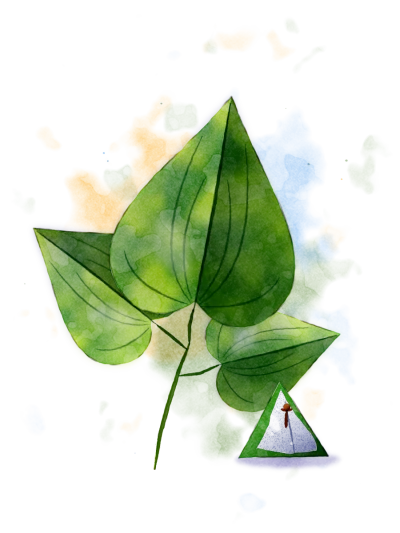
Here is the surprise: the leaf in a Banarasi paan is not grown in Banaras. Betel leaves come to the city by road and rail from Bihar, Odisha, Bengal and Madhya Pradesh, and the most prized of all is Magahi.

What makes them Banarasi happens here. The leaves come to Paan Dariba, the city’s old wholesale market, where Chaurasia families have traded betel for generations. Then they are cured: packed into lined baskets and kept in sealed rooms warmed by charcoal stoves, a day at a time, again and again, until the green turns a pale gold. The cured leaf is softer and milder, and keeps for months instead of days. Traders like to say that a cured leaf anywhere in India has most likely passed through Banaras.

Then comes the craft of the paanwala: a smear of kattha and chuna, slivers of supari, rose-petal gulkand, fennel, cardamom, sometimes a sheet of silver varak, folded into a neat triangle, the gilauri. In 2023 Banaras Pan (Betel Leaf) received its own GI tag, and Amitabh Bachchan’s ‘Khaike paan Banaras wala’, from the 1978 film Don, has been the city’s anthem since.

How to order

Ask for a meetha paan (sweet, with gulkand) and say ‘bina tambaku’, without tobacco. Put the whole gilauri in your mouth at once, then chew and relish it slowly. It is said that to enjoy a paan properly, it should stay in your mouth for 5 to 15 minutes.

Keshav Tambul Bhandar

Swastik Plaza, Lanka, near Ravidas Gate

Opened in 1966 and named after the eldest of five Chaurasia brothers, who still take turns at the counter. The queue starts around 7 am and the shutters close a little before midnight. It is about a kilometre from us, and known for its Magahi leaf in season.

At the paanwala’s counter: seated on his gaddi, he dabs kattha onto a leaf open on a brass tray, with chuna, supari, gulkand and fennel in the katoris beside him, fresh leaves fanned in a basket on a damp red cloth, and finished gilauris, one in silver varak.

Small shops open late, close early and sometimes move. Ask us what’s open today before you set out.

Bring a little Banaras home

What to buy in Kashi

Varanasi has more GI-registered crafts than any other place in India. We have kept this list short: things the city is known for, and where to buy them from people who make them.

Three rules

  1. Start at Deendayal Hastkala Sankul, the government crafts centre at Bada Lalpur. Its museum shows what good work looks like, and its shops sell at fixed prices, so you learn what is fair before the bazaar names its price.
  2. Never shop where a driver, boatman or ‘friend’ offers to take you for free. Their commission is added to your bill, often heavily.
  3. Ask for a bill, and for silk ask for the Silk Mark label. If a shop offers to ship for you, pay by card and keep the receipt.
  • Banarasi silk

    बनारसी साड़ी

    GI tagBanaras Brocades and Sarees, 2009

    Silk brocade woven with gold and silver zari, the city’s most famous craft. A handwoven saree with a complex pattern can take weeks, sometimes months, on the loom. Dupattas and stoles are lighter on luggage and budget.

    How to tell
    Ask for the Silk Mark label, which certifies pure silk and carries a hologram and serial number. On the reverse of a handloom piece you will see loose floats of thread behind each motif; a powerloom back is uniform and flat.
    Where
    Deendayal Hastkala Sankul, or a family showroom in the weavers’ quarters of Madanpura and Peeli Kothi.
    Directions to Banarasi silk (opens Google Maps)

    Stay in this storyThe Tana Bana room, Moksha Stays Kashi
  • Gulabi meenakari

    गुलाबी मीनाकारी

    GI tagBanaras Gulabi Meenakari Craft, 2015

    Pink enamel work, fired onto silver or gold in delicate rose-coloured patterns. A rare craft practised by only a few families, seen in brooches, pendants, small elephants and boxes.

    How to tell
    Real meenakari is fired, so the colour is glassy and hard, not painted. Expect to pay for the silver.
    Where
    Deendayal Hastkala Sankul, where makers sell their own pieces.
    Directions to Gulabi meenakari (opens Google Maps)
  • Wooden lacquer toys

    लकड़ी के खिलौने

    GI tagVaranasi Wooden Lacquerware and Toys

    Bright spinning tops, rattles, kitchen sets and little gods, turned on a lathe and coloured with lac. A lovely, light present for children, and for anyone who likes things made by hand.

    How to tell
    Hand-turned pieces have slightly uneven stripes and a natural lac sheen.
    Where
    The workshops of Kashmiriganj and Khojwan, where they are made, or the Hastkala Sankul.
    Directions to Wooden lacquer toys (opens Google Maps)
  • Brass and copper

    पीतल और तांबा

    GI tagBanaras Metal Repoussé Craft, 2016

    Lamps, bells, puja plates and the small copper lota for carrying Ganga water home. In Thatheri Bazaar, families of thatheras still beat metal by hand; you hear the lane before you see it.

    How to tell
    Pieces are often sold by weight. Solid brass is heavy for its size; hollow castings feel light.
  • Something sweet

    लाल पेड़ा

    GI tagBanaras Lal Peda, 2024

    Banaras Lal Peda, a milk sweet caramelised to a deep reddish brown, keeps for several days and travels well. In season, from June to July, the city’s Langda mango is worth carrying home too.

    How to tell
    Buy from a busy sweet shop on the day you leave, and ask them to pack it for travel.
    Where
    Any well-known mithai shop; ask us for the one nearest you.

This month in Kashi

November 2026

Kartik, the month of lamps. On its full moon the ghats are lit for Dev Deepawali.

Kashi almanac, November

Before you pack

Sun at Assi Ghat

Sunrise
6:15 am
Sunset
5:10 pm

About 10 h 55 min of daylight, mid-month.

Days and nights

Around 29°C by day and 15°C at night.

The river

Calm and clear: the best season on the water.

Pack

Light layers, and a shawl for dawn.

Kashi keeps time by the moon

The month by moonlight

  • New moon, about 9 Nov

  • Full moon, about 24 NovDev Deepawali

Festival days follow the lunar calendar and can shift by a day. Ask us and we’ll confirm.

Seasons

The year in Kashi

Every season brings its own reason to come. Festival dates follow the lunar calendar, so ask us for this year’s days.

  1. January

    • Kites over the ghats · Kashi
  2. February

    • Shiva's great night · Kashi
  3. March

    • Holi in Kashi · Kashi
  4. April

    • Golden mornings · Kashi
  5. May

    • Early boats, late aarti · Kashi
  6. June

    • Ganga Dussehra · Kashi
  7. July

    • Sawan begins · Kashi
  8. August

    • The river runs high · Kashi
  9. September

    • After the rains · Kashi
  10. October

    • Festival season · Kashi
  11. See this month in detail

    NovemberThis month ↑

    • Dev Deepawali · Kashi
  12. December

    • Mist on the river · Kashi

Before you come

Questions guests ask us

Honest answers to the things people wonder about before a first visit to Varanasi, from the people who live five minutes from Assi Ghat.

Is Varanasi safe for solo travellers, and for women travelling alone?

Yes, for most visitors, with the ordinary care you would take in any crowded Indian city. What you are more likely to meet is not crime but hustle: ‘free’ guides who expect a fee, boat fares that change halfway across the river, and friendly strangers walking you to a silk shop for a commission. A polite, firm ‘no, thank you’ and walking on is all it takes.

Women travelling alone may get stares, and the crowds at the aarti and at festivals can press close: stand at the edge rather than in the packed middle. Assi is one of the calmer parts of the city and stays lively into the evening. After dark, keep to the main roads and the ghat path, and ask us for an auto rather than walking the empty lanes.

In an emergency, dial 112. The UP Police women’s helpline is 1090.

When is the best time to visit Varanasi?

October to March. The days are mild and dry, the river is calm, and the city is full of festivals. December and January mornings are cold, often under 10°C, and the river is often wrapped in fog. Bring a warm layer for a dawn boat.

April to June is fierce, with afternoons often above 40°C; plan the river for dawn and dusk. From July to September the monsoon raises the Ganga over the lower ghats, the riverside path is often cut, and boat rides can be suspended when the water is high. The rain brings its own beauty, and far fewer crowds.

When is Dev Deepawali, and is it worth the crowds?

Dev Deepawali, the ‘Diwali of the gods’, falls on Kartik Purnima, the full moon about fifteen days after Diwali. In 2026 it is on Tuesday, 24 November. At dusk every ghat is lined with earthen lamps, lakhs of them, and the whole riverfront glows.

Yes, if you plan for it. It is also the busiest night of the year. Rooms and boats book out weeks ahead, prices rise, and vehicles are kept away from the river, so plan to walk. Book early, and come to the ghats well before sunset.

Is the Kumbh Mela held in Varanasi?

Surprisingly, no, and almost everyone assumes it is. Varanasi is one of the holiest cities in India, but the Kumbh has never been held here. It moves between four places only: Prayagraj (at the Sangam of the Ganga, Yamuna and the unseen Saraswati), Haridwar, Nashik–Trimbakeshwar and Ujjain.

The nearest is Prayagraj, about 120 km away, roughly three hours by road or under two hours on the fastest trains. The last Maha Kumbh there ran from 13 January to 26 February 2025, and the next big gathering at Prayagraj, the Ardh Kumbh, is expected in 2031. Every year from January to early March, Prayagraj also holds the Magh Mela, a smaller version of the same bathing festival at the same Sangam.

The next Kumbhs elsewhere are at Haridwar in 2027 (January to April), Nashik–Trimbakeshwar (the Simhastha, which began on 31 October 2026, with its main bathing days in August and September 2027), and Ujjain in 2028. In Kumbh years many pilgrims combine the Sangam with Kashi, so book early. See Beyond Kashi above for planning a day or two in Prayagraj.

How do I get to Assi Ghat from the airport or the station?

Lal Bahadur Shastri Airport at Babatpur is about 27 km away: roughly an hour by taxi, a little more at rush hour. Varanasi Junction, also called Cantt, is about 7 km, or 25 to 35 minutes. Banaras station, formerly Manduadih, is a similar distance.

Check the station on your ticket: Pt. Deen Dayal Upadhyaya Junction, the old Mughalsarai, is across the river, so allow an hour. Send us your flight or train and we will help you arrange a ride.

How many days do I need in Varanasi?

Three days is a good start: one for the river, from a dawn boat to the evening aarti; one for the old city, its lanes and temples; and one for Sarnath or BHU. Varanasi rewards slowness, so if you can, stay longer and simply sit on the ghats.

What should I wear?

Light, loose clothes that cover your shoulders and knees. They are cooler in the heat, expected in temples, and draw less attention. A scarf or dupatta is useful for temple visits.

Shoes come off at every temple, so slip-ons make life easier. In winter, bring a warm layer for early boats and evenings by the river.

Why is Varanasi called the oldest living city in the world?

Because it has never stopped being a city. Excavations at Rajghat, where the Varuna meets the Ganga, found it lived in without a break from about 800 BCE, and villages nearby go back to around 1200 BCE. By the Buddha’s time it was the capital of the kingdom of Kashi, and its rituals, lanes and trades have carried on ever since.

Strictly, a few places such as Damascus and Jericho have older remains, so ‘one of the oldest continuously inhabited cities’ is the careful way to say it. Mark Twain put it less carefully: ‘older than history, older than tradition, older even than legend’.

Why is Varanasi also called Banaras and Kashi?

Kashi, from kas, ‘to shine’, is the oldest name: the luminous city of Shiva, and once the name of the whole kingdom. Varanasi is the city between two streams, the Varuna in the north and the Assi in the south. Banaras is Varanasi worn down by everyday speech, through Pali and Prakrit into Hindi, and the British spelt it Benares.

Banaras was the official name until 24 May 1956, when the state government restored Varanasi. All three are still in daily use.

Can I visit Kashi Vishwanath if I am not Hindu, or from abroad?

Visitors from abroad can book a darshan ticket at the temple trust’s help desk by showing their original passport, with copies of the passport and visa; ask there for the current price. Local reports of the temple’s rules say the inner sanctum is for Hindus, while others take darshan from just outside it. Ask at the help desk on the day.

Phones, smartwatches, cameras, pens and bags are not allowed inside, and lockers are limited, so leave them with us. Dress modestly.

Is there a jyotirlinga in Varanasi?

Yes. Kashi Vishwanath, the Lord of the Universe, is one of the twelve jyotirlingas of Shiva, the places where he is worshipped as an endless pillar of light. The hymn that names the twelve, the Dvadasha Jyotirlinga Stotram, says: ‘वाराणस्यां तु विश्वेशं’, ‘in Varanasi, Vishvesha’.

The temple stands in the old city above the ghats, now reached through the Kashi Vishwanath Corridor from the river. See the questions on visiting Kashi Vishwanath and Kaal Bhairav for timings and rules.

Why is Uttarkashi also called Kashi?

Uttarkashi, ‘the Kashi of the north’, is a Himalayan town in Uttarakhand that mirrors Varanasi: it lies on the Bhagirathi, the Ganga’s source stream, between two streams also named the Varuna and the Asi, and it has its own Manikarnika Ghat and its own Kashi Vishwanath temple. The Skanda Purana calls it Saumya Kashi.

Kashi means ‘the luminous’, the place of Shiva’s light and of liberation, and other holy towns took the name to share that holiness, among them Guptkashi near Kedarnath and Tenkasi in Tamil Nadu. Only Varanasi’s Vishwanath is one of the twelve jyotirlingas.

Who is Kaal Bhairav, and should I visit before Kashi Vishwanath?

Kaal Bhairav is Shiva’s fierce form and the Kotwal, or guardian, of Kashi. Tradition says you take his darshan before Kashi Vishwanath, or straight after, to ask his leave to be in his city. His shrine is in the old city near Maidagin, and the priests there tie a protective black thread on your wrist. It is very dear to us; read more about him above.

Can I watch or photograph the cremation ghats?

You may watch quietly, from a respectful distance, at Manikarnika and Harishchandra, the two cremation ghats. Please do not photograph the fires or the families: these are funerals, held every hour of every day.

Never give money to anyone there who asks for ‘wood for poor families’, or offers to show you a viewing room. It is the best-known scam in the city. If you want to help, give to a registered charity.

Why do Hindus come to Varanasi to die?

Hindus believe that whoever dies in Kashi is freed from the cycle of rebirth, because Shiva whispers the Taraka mantra into their ear. Kashi is one of the seven cities the Garuda Purana calls givers of liberation, and the most famous for the belief that dying there is enough.

Some families bring the dying to houses such as Kashi Labh Mukti Bhawan, run since 1958 by a Dalmia family trust, where they can stay for up to fifteen days. These are homes, not sights; please visit only if invited.

Is it safe to bathe in the Ganga?

For Banarasis a dip in the Ganga is sacred, and many bathe every morning. But the water at the city’s ghats often tests far above India’s limit for bathing: the maximum allowed is 2,500 faecal bacteria per 100 ml, and the Sankat Mochan Foundation has recorded tens of thousands at Tulsi Ghat. The current can be strong, especially in the monsoon, and the steps are slippery.

Many visitors touch the water, or sprinkle a little on their head, from the steps or a boat. If you do go in, keep it out of your mouth and eyes, and stay close to the steps.

Do I need cash, or can I pay by phone?

UPI payments by phone work almost everywhere, from cafés to many tea stalls. Still carry small notes: for boats, rickshaws, temple flowers and the smallest stalls, cash is simplest. There are ATMs around Lanka, a short walk from us.

How do I get around the city?

Walk the ghats: it is the best way to see them, and from Assi you can follow the river north for kilometres. For the city, e-rickshaws and autos are everywhere; agree the fare first, or ask us to call one.

The old city around Kashi Vishwanath is a no-vehicle zone from Godowlia to Maidagin, so expect to walk the last stretch. Going by boat between the ghats is the most beautiful way of all.

Still wondering?

Ask us on WhatsApp. We will tell you what today looks like on the river.

Ask us on WhatsApp (opens WhatsApp)

Caring for Kashi

The people keeping Kashi and the Ganga alive

The Ganga gives this city its life, and it is under strain from sewage, plastic and falling water. These people have spent years doing something about it. Their stories are worth knowing before you step onto the ghats.

  1. The priest-engineer of Tulsi Ghat

    Veer Bhadra Mishra and the Sankat Mochan Foundation

    A professor of hydraulic engineering at BHU who was also the head priest of the Sankat Mochan temple, and bathed in the Ganga every day. In 1982 he set up the foundation at Tulsi Ghat, a short walk upriver from us, and began the Clean Ganga campaign: ‘not a single drop of sewage into the Ganga at Varanasi’. Its laboratory has tested the river at the bathing ghats since 1993. His son, Prof. Vishwambhar Nath Mishra, leads the work today.

    The foundation (opens a new tab)
  2. The river’s dolphin friends

    Dolphin Mitras

    The Ganges river dolphin is India’s national aquatic animal. It is nearly blind and finds its way by sound, and it lives only where the river is deep and clean. A small group still lives downstream near Kaithi, where the Gomti joins the Ganga. Under Project Dolphin, boatmen, fishermen and students trained as Dolphin Mitras (dolphin friends) watch over them and help people understand why they matter.

  3. Mapping the heritage

    Rana P. B. Singh and Vrinda Dar

    A geographer at BHU, Prof. Singh has spent decades recording every ghat, shrine and pilgrim route of the city. In 2002 he and Vrinda Dar prepared proposals to put the riverfront and old city on the UNESCO World Heritage List. In 2021 India added the ‘Iconic Riverfront of Varanasi’, all 84 ghats, to UNESCO’s tentative list. The ghat stories on this page draw on his Varanasi Heritage Dossier.

    UNESCO tentative list (opens a new tab)
  4. Every ghat, photographed

    Vrinda, on Wikimedia Commons

    A Wikimedia contributor named Vrinda walked the riverfront and photographed the ghats one by one, then shared the pictures freely for anyone to use. Most of the ghat photos above are theirs: a quiet gift to everyone who loves this river.

    The photos (opens a new tab)
  5. The morning after

    Volunteers on the ghats

    After big festivals like Dev Deepawali, the steps are covered in lamps, flowers and plastic. Volunteer groups, students and the city’s own cleaners come out to sweep the steps and pull waste out of the water.

How you can help while you’re here

  • Carry your own bottle and say no to plastic bags.
  • Float only leaf-cup lamps and flowers, never plastic or foil.
  • Keep soap and shampoo out of the river.
  • Take a rowing boat at dawn: quieter, and no fumes on the water.
  • Take your rubbish back with you; bins on the ghats fill up fast.

Reading

Books to read on Kashi

A very short list of books that are both good and a pleasure to read. Some of them are on our shelves.

  • Banaras: City of Light

    Diana L. Eck, 1982

    The classic portrait of the city: its myths, its ghats, its pilgrim routes and its idea of death as liberation. If you read one book, read this.

    On our shelf at Moksha Stays

    Ask at the front desk and we’ll bring it to you.

    Ask the front desk: Banaras: City of Light (opens WhatsApp)
  • Darśan: Seeing the Divine Image in India

    Diana L. Eck, 1981

    A short, clear book on why Hindus go to ‘see’ a deity, and to be seen. Read it and the temples suddenly make sense.

    On our shelf at Moksha Stays

    Ask at the front desk and we’ll bring it to you.

    Ask the front desk: Darśan: Seeing the Divine Image in India (opens WhatsApp)
  • The Presence of Śiva

    Stella Kramrisch, 1981

    A deep and beautiful journey through the myths of Shiva. Kashi is Shiva’s own city; this is the book to understand him.

    On our shelf at Moksha Stays

    Ask at the front desk and we’ll bring it to you.

    Ask the front desk: The Presence of Śiva (opens WhatsApp)
  • Kaleidoscope City: A Year in Varanasi

    Piers Moore Ede, 2015

    A warm, easy memoir of a year living by the river: boatmen, wrestlers, musicians and the burning ghats.

  • Songs of Kabir

    translated by Arvind Krishna Mehrotra, 2011

    Kabir, the weaver-poet of Banaras, in sharp, modern English: funny, fierce and still surprising after 500 years.

  • Kashi ka Assi

    Kashinath Singh, 2004 · in Hindi

    A salty, comic novel about the tea shops of Assi, Pappu’s among them, and the arguments that never end. It was made into the film Mohalla Assi.

Stay in the story

Eleven rooms, eleven stories of Kashi

Every room at Moksha Stays Kashi is named for a thread of the city. Read the story, then sleep in it, five minutes from Assi Ghat.

  • Room 208

    Darwaza

    Darwaza means doorway. In Kashi, the doorway that matters opens onto moksha, freedom from rebirth.

    Hindus count Kashi among the seven cities that grant liberation, and believe that dying here is enough. Darwaza keeps that thought at the head of the bed: a threshold to rest under, and to wake through.

    In your room · Find it in Kashi
    In your room
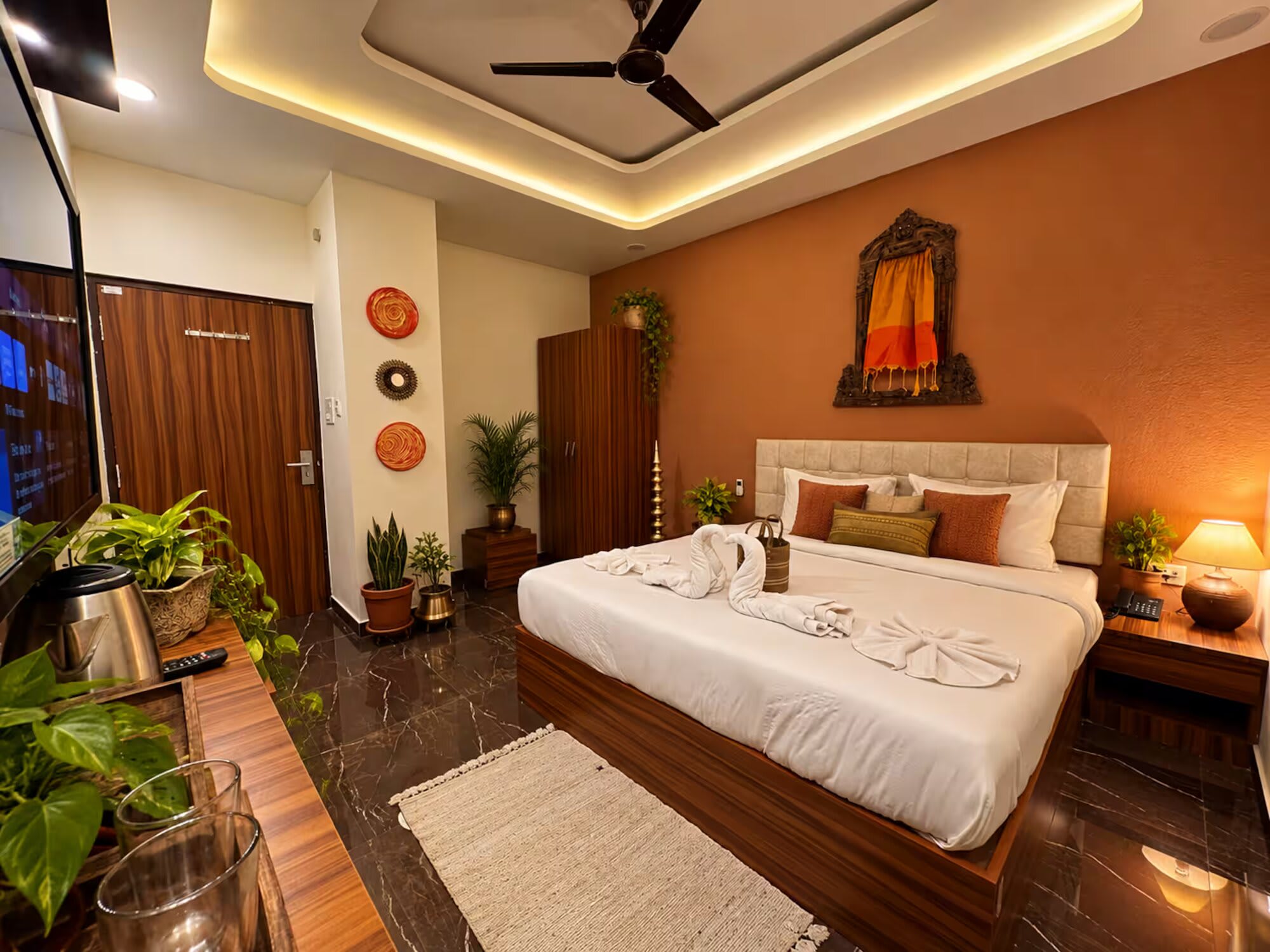
    An antique carved door frame, draped in saffron cloth, rises over the king bed on a warm terracotta wall, with a tall brass lamp stand and red wall plates nearby. Sleeps three with an extra bed.
    Find it in Kashi
    Assi Ghat · 450 m · 6 min. Kashi’s old southern gate, where the little Asi river met the Ganga. Go at first light, when the steps are still quiet.
  • Room 204

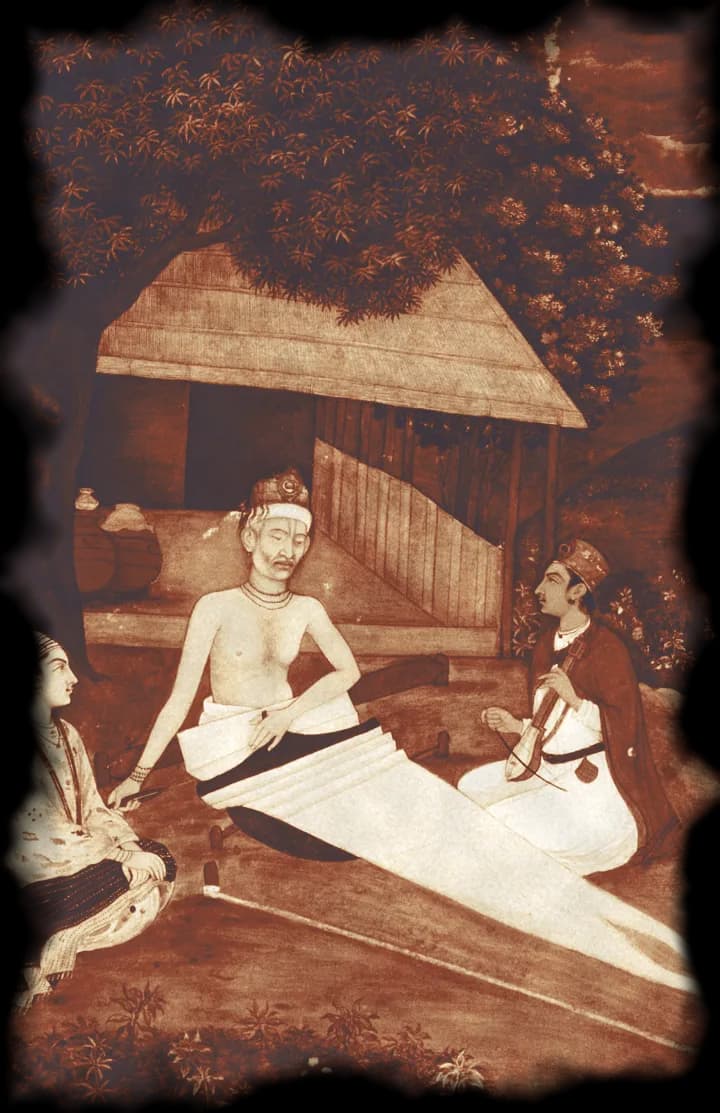
    Kabir

    For Kabir, the 15th-century weaver of Kashi who sang at his loom that God is found within, not in temple or mosque.

    He worked a loom all his life and made it his poetry. In his best-loved weaving song the body is a finely woven sheet, lent for one lifetime; the wise wear it with care and give it back unstained.

    दास कबीर जतन करि ओढ़ी, ज्यों की त्यों धर दीनी चदरिया

    Kabir, the servant, wore it with care, and laid the sheet down just as it was given.

    Kabir, ‘Jhini jhini bini chadariya’ (sung in several versions)
    In your room · Find it in Kashi
    In your room
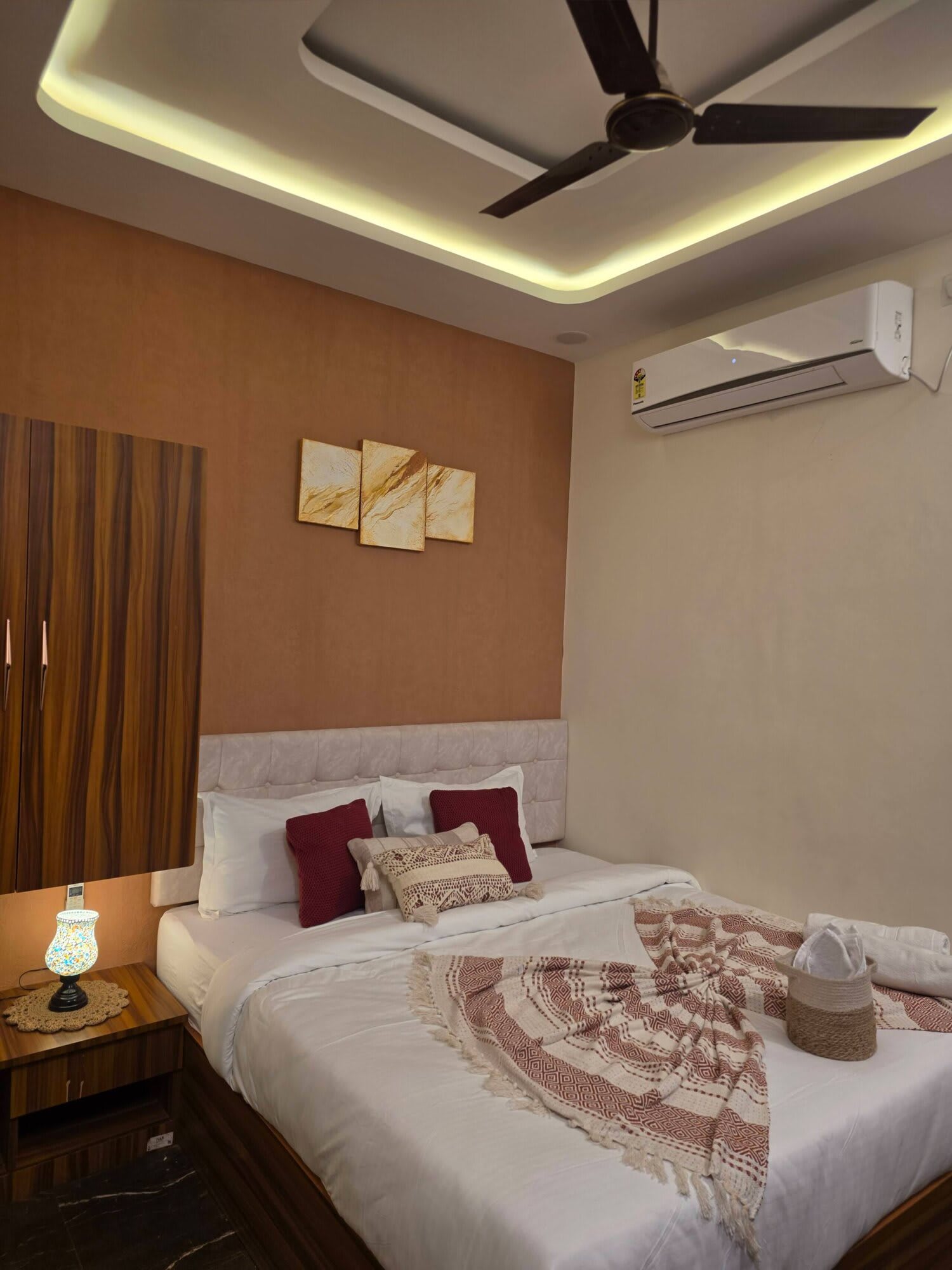
    Gold-and-white abstract panels catch the light on a caramel wall, brass lanterns glow through red glass, and the king bed is piled with maroon cushions under a red-and-white throw.
    Find it in Kashi
    Kabir Chaura Math. In the old city, where Kabir is said to have lived, still kept by his followers. Lahartara, the pond where tradition says he was found as a baby, is about 7.5 km by road.
  • Room 101

    Kamal

    Kamal is the lotus, which rises from the mud and opens clean to the sun: the flower of awakening.

    At Sarnath, where the Buddha gave his first sermon, Ashoka’s Lion Capital stands on a bell of downturned lotus petals. The four lions above it became the emblem of India.

    In your room · Find it in Kashi
    In your room
    A yellow three-flower panel blooms on a burnt-orange wall above a king bed in a royal-blue throw, with a blue mosaic lamp at its side and a standing candle-style floor lamp. Sleeps three with an extra bed.
    Find it in Kashi
    Sarnath Museum · 14 km. The Lion Capital is in the museum, beside the deer park and the Dhamek Stupa. Allow half a day; the museum is closed on Fridays.
  • Room 205

    Mangal

    Mangal means auspicious, the blessing that begins things. It is also the name of Kashi Vishwanath’s first aarti of the day.

    Long before sunrise, the Mangala aarti wakes the jyotirlinga with lamps, bells and chanting. The plaque by your door puts it in one line: in Kashi, every beginning becomes a blessing.

    In your room · Find it in Kashi
    In your room
    A yellow mandala hangs on a burnt-orange wall above a king bed in a navy knitted throw. At the far end, an arched glass door looks out over the neighbouring rooftops.
    Find it in Kashi
    Kashi Vishwanath Temple · 3 km. The Mangala aarti runs from 3 to 4 am for ticket holders, a little earlier on some festival days. Book on the temple trust’s website and arrive by 2:30.
  • Room 207

    Pravah

    Pravah is flow: the Ganga moving past Kashi, and the ease of going with it.

    At Varanasi the Ganga turns north, back towards the Himalaya, and bends into a crescent that tradition likens to the moon on Shiva’s brow. Eighty-four ghats line the curve, from Assi to Adi Keshava.

    In your room · Find it in Kashi
    In your room
    A blue wave artwork cradles a small brass kalash, the water pot of Hindu worship, on an ochre wall, above a queen bed dressed in an indigo fringed throw.
    Find it in Kashi
    The river walk from Assi · 450 m to the steps. Walk north from Assi Ghat and you are walking downstream, with the current. Tulsi Ghat is next; Dashashwamedh is 2.5 km from us.
  • Room 206

    Tana Bana

    Tana bana is warp and weft, the two sets of threads that cross to make every cloth.

    Banarasi brocade, silk woven with gold and silver zari, has carried a GI tag since 2009. Writers on the city use the same words for its people: the weaving is largely the work of Muslim families and the trade largely in Hindu hands, two sets of threads in one cloth.

    In your room · Find it in Kashi
    In your room
    Framed handloom swatches gather on an ochre wall over a king bed with striped woven cushions, beside an arched window. The plaque at the door shows silk saris and the ghats at sunset.
    Find it in Kashi
    Madanpura and Peeli Kothi. The weavers’ quarters of the old city, where you can still hear the looms from the lanes. Ask us to add our lanes and weavers walk to your stay.
  • Room 201

    Maati

    Maati is earth: the river clay that Kashi is built on, shaped from, and still drinks its tea from.

    Potters and farmers lived around Kashi by about 1200 BCE, and the old city at Rajghat is full of their terracotta. Assi Ghat itself was a clay bank under shady trees until its stone steps came in 1988, and chai still comes in kulhads, clay cups used once and given back to the earth.

    In your room · Find it in Kashi
    In your room
    A hand-cut metal tree spreads across a textured terracotta wall, with plants in carved pots, terracotta mugs for your tea and a blue patterned rug around the king bed. Sleeps three with an extra bed.
    Find it in Kashi
    Bharat Kala Bhavan, BHU · 2.5 km. The university’s museum shows terracotta figures dug up at Rajghat, alongside its miniature paintings and textiles.
  • Room 203

    Kashi

    Kashi, from kas, ‘to shine’: the city of light, also called Varanasi and Banaras.

    Its oldest name means the luminous, the place where Shiva’s light is closest. See it best on Dev Deepawali, the full moon of Kartik in November, when earthen lamps line the ghats from end to end.

    In your room · Find it in Kashi
    In your room
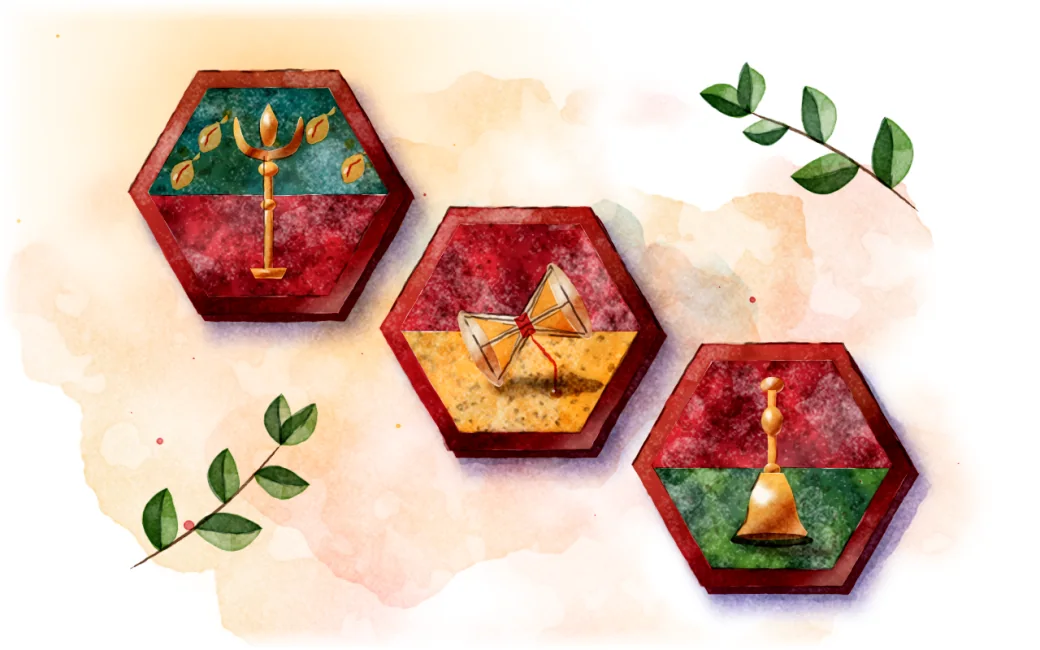
    Under the painted words ‘Where Kashi whispers to the soul’, three red hexagon frames hold Shiva’s emblems on Banarasi silk: a brass trishul, a damaru drum and a temple bell. Carved wooden diamonds on the burnt-orange wall, and a flame-orange throw on the king bed.
    Find it in Kashi
    Dashashwamedh Ghat · 2.5 km. The Ganga aarti every evening after sunset: tiers of brass lamps against the dark river, the easiest way to see why Kashi means light.
  • Room 102

    Ananda

    Ananda is bliss, and one of Kashi’s oldest names is Anandavana, ‘the forest of bliss’.

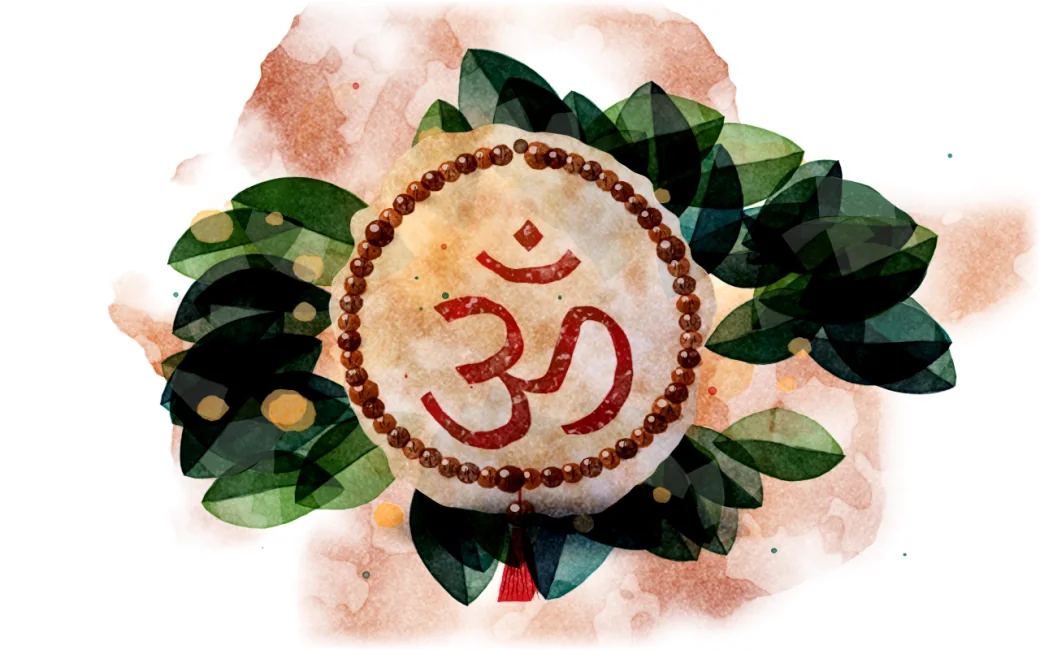
    The Puranas say Shiva loves this place so much that he never leaves it, which is why Kashi is also Avimukta, ‘never forsaken’. The mala on your wall is rudraksha: the name means ‘Rudra’s eye’, and legend says the beads grew from Shiva’s tears.

    In your room · Find it in Kashi
    In your room
    A hand-painted red Om, hung with a rudraksha mala, on the terracotta wall above a queen bed in a deep-teal knitted throw and indigo print cushions.
    Find it in Kashi
    Kedar Ghat · 1.5 km · 20 min. Belief says Kashi rests on Shiva’s trident. Kedareshvara, at Kedar Ghat, marks its southern point; its red-and-white striped steps are easy to spot from a boat.
  • Room 209

    Antara

    Antara means the space within. In a dhrupad, it is the second movement, where the melody climbs to the upper octave.

    Dhrupad, the oldest surviving form of Hindustani classical singing, unfolds in four parts: sthayi, antara, sanchari and abhog. After the low, steady opening, the antara is where the voice rises. Kashi has heard it every year since 1975 at the Dhrupad Mela.

    In your room · Find it in Kashi
    In your room
    A pierced brass lamp hangs low beside a queen bed with red and mustard cushions, beneath a carved wooden diamond on the terracotta wall.
    Find it in Kashi
    Tulsi Ghat · 500 m · 7 min. The Dhrupad Mela fills its steps for five days in February or March, around Mahashivratri. On other evenings it is a quiet walk, the next big ghat north of Assi.
  • Room 202

    Dhwani

    Dhwani is sound and its resonance, in a city UNESCO named a City of Music in 2015.

    Banaras has its own tabla style, and gave India the shehnai of Bismillah Khan, who did his riyaz in the music gallery of the Balaji temple at Balaji Ghat. The day here still begins and ends in sound: bells, conches and a morning raga at Assi.

    In your room · Find it in Kashi
    In your room
    Above the king bed, a hand-embroidered wall hanging of six roundels, each with a pair of folk dancers in swirling skirts, one with a drum: sound turned into rhythm and dance. Olive-green cushions, a red zigzag runner and a woven pouf.
    Find it in Kashi
    Sankat Mochan Mandir · 1.2 km. Since 1923 its Sangeet Samaroh has brought India’s great musicians here for several nights around Hanuman Jayanti, in March or April, free and through the night.
  • Find your room

    All eleven rooms, with photos, prices and dates.

    See all rooms
The last lamp afloat.

Stay at Moksha Stays Kashi

Read it here, then wake up near Assi Ghat.

A gentle pause in one of the world’s oldest living cities. Art-filled rooms a short walk from Assi Ghat: a calm base for the ghats, temples and lanes of Kashi.

Prices are per room, per night. Some rooms and dates confirm instantly; for the others, send a request and pay only once we confirm.